Adrian Childs
Owner, Colourhill Interiors
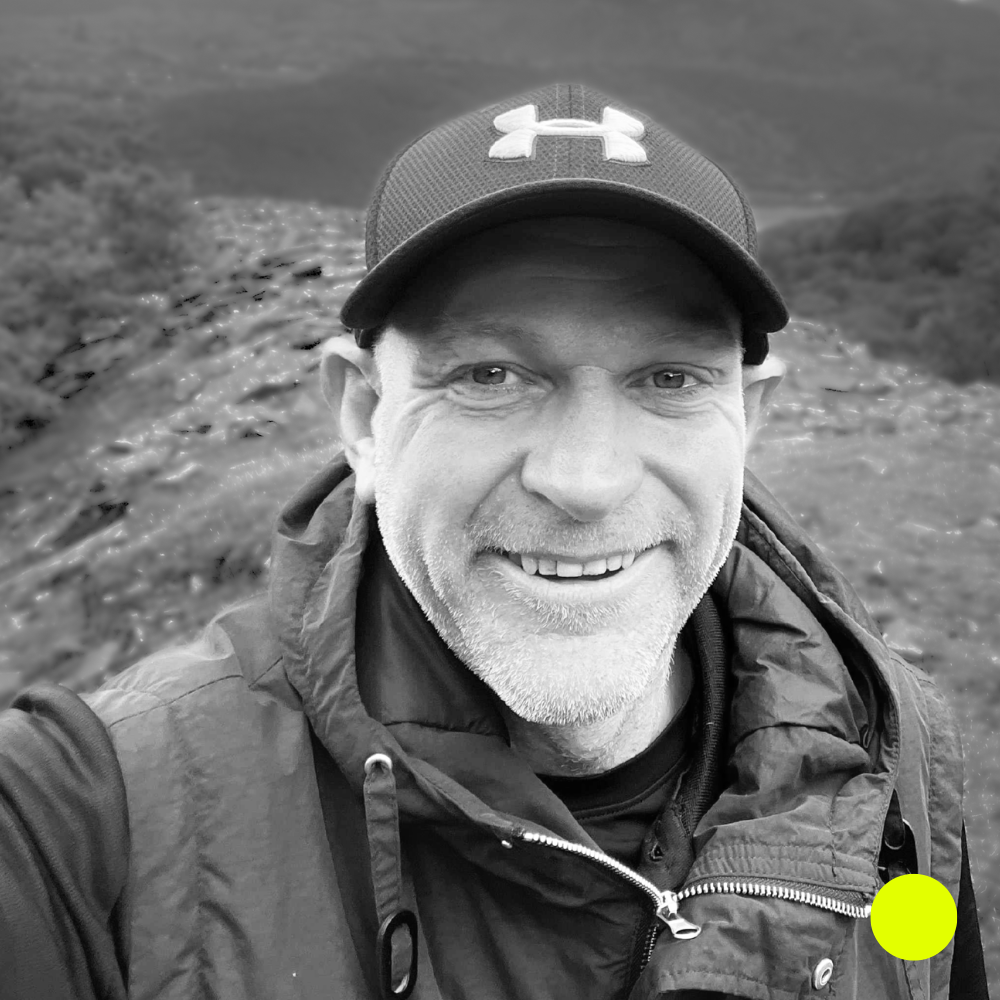
Adrian Childs speaks candidly about life behind the scenes as an entrepreneur: the strategic moves that took his dream beyond the workshop, and the lessons that turned a vision into a thriving business.
Tell me a bit about Colourhill – how did it all begin?
Adrian: Colourhill started about 11 years ago. I’d studied product and furniture design at university and always liked building things. After university, I did some travelling, then moved into kitchen fitting. A friend of mine was selling kitchens and I joined him as project manager, but I quickly realised that I wasn’t happy with how the industry was being run: customers weren’t getting good service and were often overcharged.
I thought I could do better, so I partnered with a school friend who ran a construction business … and that’s how Colourhill was born.
You make it sound so easy … how were the early days of setting up shop?
Adrian: Well my friend is a financial whizz so he managed the payments. Any money we earned was reinvested straight back into the company. Initially, it was just the two of us, working as a trade manufacturer. We then brought in a brilliant designer from the previous company, Dale.
The first few years were basically survival mode: finding any clients we could find, taking on little projects and learning on the job. It was just figuring out how to run a business properly – building a reputation, getting our name out there. None of us had much experience with that side of things.
We started on a small industrial estate in Ollerton, doing a few kitchens and focusing on retail growth. We did a lot of the work ourselves at first, just to keep costs down and deliver something decent. Over time, that strategy helped us expand from one showroom to four.
Wow four showrooms – very few independents can make such claims!
Adrian: Yes, but we were quite small and passionate. It was mostly word-of-mouth and our hard work paid off.
We were right in the middle of nowhere in North Nottinghamshire and grew the retail business just through recommendations and doing a good job. In the first few years, we went from nothing to a little factory with a small retail showroom on the side.
You were serving both consumers and trades – wasn’t that challenging?
Adrian: Yes, in hindsight it was certainly challenging, but it didn’t feel that way … at the time it actually felt slow! We had some machinery, a good designer, and a little space at the front where we put some kitchens in.
Looking back though, 11 years isn’t long in business when starting with nothing.
Where does Steve come into the story?
Adrian: Oh, Steve Keene was one of my trade customers! It always makes me laugh because he was quite a high-up accountant, and then he decided on a career change and got into kitchens. Quite a dramatic shift – if you want to get away from stress, doing kitchens probably isn’t the best choice!
He started as a little one-man band, designing, fitting and doing everything himself and using us as a trade supplier. After three or four years, he wanted to expand so we saw an opportunity there and created another company called SK Colourhill. We got a little shop in West Bridgford and set him up as the first branch of Colourhill.
You expanded fairly rapidly after this, didn’t you?
Adrian: Yes, setting up that first branch went really well, so we branched out and got a big showroom in Beeston. Again it was all from nothing, just covering costs and doing great kitchens. Finding the right people was challenging, but we managed it.
Just before lockdown, we partnered with someone in Chesterfield who did carpets and wanted to get into kitchens, so we opened another showroom there. Not long after, Dale was doing really well at the factory, so we got him a bigger showroom in Mansfield in a more commercial area. At the same time, Steve opened a showroom in Lincoln.
So the run up to lockdown and the time right after was actually very busy for us. In hindsight, that wasn’t a real reflection of the market we have now. We rode a bit of a bubble and expanded a lot in a short amount of time.
How has your business evolved over time?
Adrian: Well, we started off really small, just trying to keep things going. Over time, we realised that if we wanted to grow, we had to invest, and that’s when the big changes started.
One of the first major steps was buying a CNC machine. That was a big decision because it’s expensive, and honestly, we weren’t sure if it would pay off immediately.
But it completely changed the way we worked. It allowed us to do things that we couldn’t do before: more precise stuff, more complex work, and we could take on bigger projects. It made a huge difference in speed and quality.
How did your workflow change because of the CNC machine?
Adrian: The impact was huge: stuff that used to take us hours to do could now be done in minutes, with better precision. That meant we could handle more jobs and more complex projects – things that were out of reach before.
It also changed how clients saw us. Before, we were limited to small residential jobs because that’s all we could physically manage. Now we were able to offer solutions that other small workshops couldn’t, and that brought in bigger projects and more referrals. It really opened doors for us, especially in the commercial sector.
What kind of challenges did you face during this period of rapid growth?
Adrian: Oh, plenty of challenges! Scaling up isn’t straightforward. Cash flow was a major challenge because buying a CNC and other equipment is a big upfront cost, and when you’re small, every pound counts.
Then there was the training side, getting people to use the new machine properly.
Juggling the increased workload while maintaining quality was another challenge. When you start taking on bigger projects, there’s a temptation to just push through and hope for the best, but that risks quality. So we had to put new processes in place, plan things properly, and make sure everyone knew their role.
It wasn’t easy, but over time, it became routine.
How did you approach training for the new machinery?
Adrian: We had to spend a lot of time doing hands-on training as well as formal sessions. I’d sit down with the team, show them step by step how to use the CNC, explain the nuances and things that weren’t obvious, and then let them try under supervision
Initially, the team was nervous and hesitant because it was new and unfamiliar, and honestly, it’s intimidating at first. It took a few months for everyone to feel confident, especially because mistakes could be costly.
But we let them learn gradually, and once they did, it was amazing how much it boosted productivity. The key was not rushing it and giving people time to get comfortable.
Have you expanded your team as well?
Adrian: Yes, definitely. When the workload started increasing, we hired more skilled joiners to handle production, and we also brought in a project manager. That was a big step because it allowed me to step back from scheduling and client communication and focus on bigger-picture stuff – planning growth, finding strategic opportunities, thinking about investments. Without the right team, we simply couldn’t have grown the way we did. Trying to do everything yourself just limits what you can do.
What kind of projects are you taking on now compared to the early days?
Adrian: Earlier on, it was small residential jobs – kitchen cabinetry, bespoke furniture, small joinery projects. Nothing particularly complex, really.
Now, it’s on a completely different scale. The CNC allows us to do high-end custom work efficiently: commercial projects, pieces that require precision and repeatability. This is something we couldn’t even think about a few years ago.
Looking back, what were some of the most pivotal moments in your business journey?
Adrian: Buying a CNC machine was a major turning point for us. Before that, all work was manual – slow and inconsistent.
Another one was hiring a project manager: that gave structure to the business, allowed us to manage multiple clients and projects smoothly, and freed me up to focus on growth.
Those two decisions set the foundation for where we are now. Honestly, if we hadn’t done those things, we’d still be struggling to get through small jobs manually.
Have there been any lessons you learned along the way about managing growth?
Adrian: Oh, so many lessons! One big one is that growth isn’t just about getting more clients; it’s about preparing your team, your processes, and your tools. You have to invest in equipment and training before the demand is fully there, otherwise you’ll struggle when bigger opportunities come along.
Delegation is another big one: trying to do everything yourself is a trap. Trusting your team and giving them responsibility is essential, even if it’s uncomfortable at first.
What advice would you give to someone thinking about scaling a joinery or similar business?
Adrian: Growth is a marathon, not a sprint. Start small, learn, build a solid foundation, but always plan for the next step.
Don’t be afraid of spending on quality equipment because it pays off quickly in efficiency and precision. Invest in good tools early so that when opportunities come, you can avail them. Hire the right people, they’re critical. And be patient with training and processes.
Looking forward, where do you see your business in the next few years?
Adrian: We want to keep expanding into commercial projects while keeping our bespoke quality. We’re exploring new techniques and machinery to innovate and improve efficiency. The goal is sustainable growth – taking on bigger, more complex projects without losing the personal touch that got us here.
We want to keep our reputation for quality high-end work while also being able to scale intelligently.
If you were to do it all over again, what is one thing you would do differently?
Adrian: From the factory side, I would’ve invested in a CNC much earlier. We started with secondhand machinery, but the CNC alone cost as much as setting up the whole factory.
I’ve often thought about whether it would’ve been possible for me to buy the CNC from the start – in hindsight, I’d have made sure I’d had enough funding from the beginning to cover advertising, website design as well as a CNC machine.
I’d have embraced technology from day one, because I now know how important it is. Back then I had to learn it the hard way.