
Gary Daly
Owner, Cr8tive Kitchen & Bathroom Co.
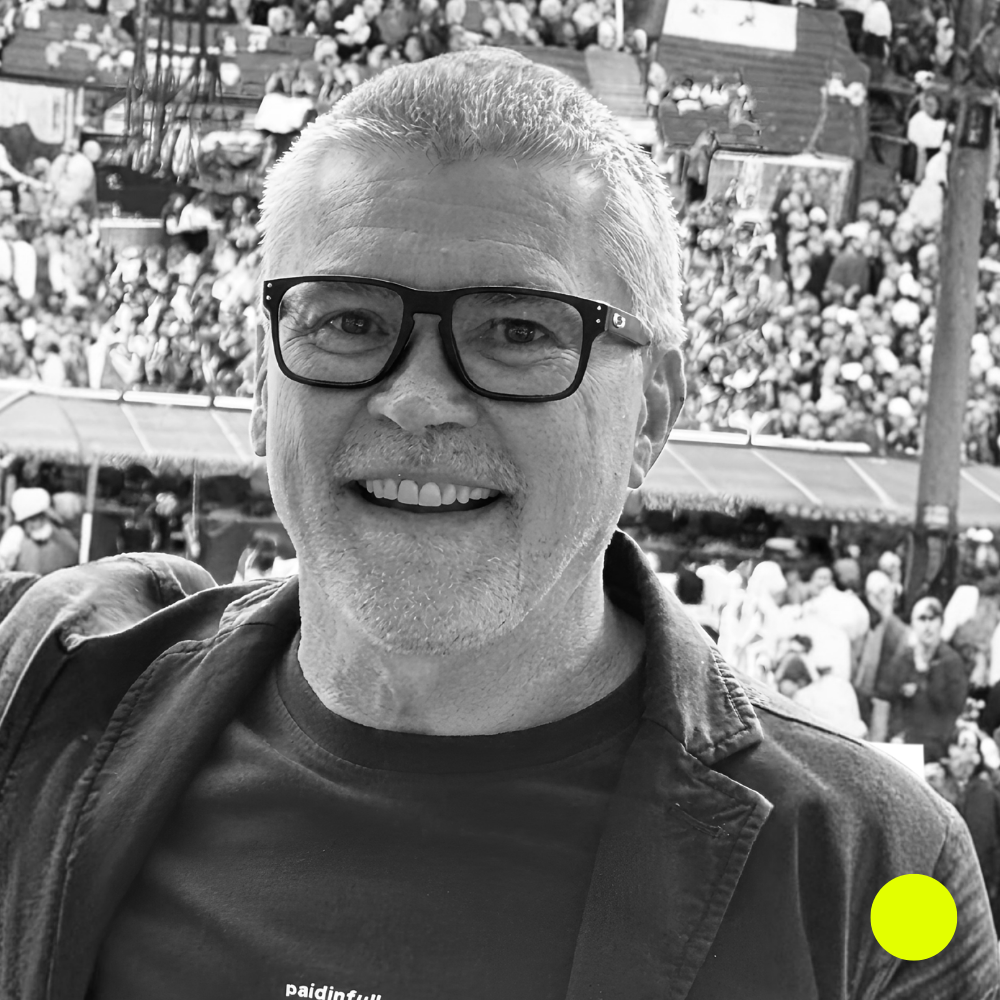
Gary Daly discusses leaving behind a patented, commercially successful shower product to pursue his passion for bespoke, complex home renovations built on traditional craftsmanship and word-of-mouth recommendations.
Tell me about Cr8tive Kitchen & Bathroom Co. How did it all start and what do you offer today across indoor and outdoor spaces?
Gary: I started Cr8tive Kitchen & Bathroom Co. just before lockdown, so it’s actually a fairly young business. We have a showroom in Dronfield that I set up with my business partner, Andrew Stoddard.
Before that, I ran another business called Splashblade, which I launched in 2009. It was a product I’d invented – a specialist shower curtain accessory designed to stop water from spilling onto the floor. I even secured a patent for it.
What happened to Splashblade?
Gary: It was a hit! I was interviewed on BBC Radio 2’s Drivetime show, which reaches over six million listeners. Shortly after, I was approached by Nido Spitalfields – one of the tallest student residences in the world – who wanted to trial my product.
They loved Splashblade and quickly placed an order for 1,000 units. That initial success led to further collaborations and eventually a £1.3 million contract to manufacture, supply, and install 3,000 student beds across nine cities. We delivered the entire project in just 10 weeks.
Wow, that’s huge! What made you pivot?
Gary: Well, I’ve always been passionate about the KBB and construction industries, so I eventually closed the chapter on Splashblade and started Cr8tive Kitchen & Bathroom Co. I really wanted to concentrate on my passion.
That takes a lot of courage, choosing to move away from something that is already successful.
Gary: Yes, but I love what I do today. My business allows me to do all sorts of building work including kitchens, bedrooms and bathrooms along with extensions, landscaping and specialist projects – you name it, we can do it all.
What makes your business stand out, not just in the KBB space but the wider home improvement industry?
Gary: At its core, it really is the quality of our work. We’ve never advertised, everything is word-of-mouth. Customers recommend us – that’s how we keep getting work.
It’s hard to get good tradesmen these days and people are very pleased with our results. That’s what makes us stand out.
You are doing such a wide variety and size of projects – how do you manage with such a small team?
Gary: Our biggest strength is that we’re all multiskilled. I have a tiny team – only three people – but we know each other very well. For example, I’ve worked with one of my coworkers, Craig, for over 40 years.
We rely on each other and we’re nice people. All of my colleagues are very polite and do great work, so customers always praise us as professionals. That’s what matters most – making people feel comfortable and happy.
It’s still important for us to stay small and not over-stretch ourselves – if you get too big, that’s where your major problems happen.
Surely you do need more people when you take on bigger projects though.
Gary: Oh yes, definitely! When we do bigger jobs, we bring in trusted tradesmen, electricians, plasterers – it’s always people whom we’ve worked with before, whose work we know and trust.
What about finding new people, younger talent?
Gary: To be honest, finding young people to join the trade has been hard. I don’t know why, but a lot of younger people are not interested in getting involved in the construction industry. Perhaps they find it too hard. So we’re still working with the same tradespeople we’ve relied on for years.
Does that worry you for the future?
Gary: Yes, of course. It was very different from when I started out learning skills. I left school at 15 and worked across all trades – electrics, plumbing, plastering, tiling – you name it, I can do it myself. I still keep hands-on.
But I find younger people today don’t seem to have the knowledge that comes from getting stuck in – I gained that through experience.
So what do you think needs to change?
Gary: Schools need to train students better to get them into the construction industry. Subjects like Design & Technology (DT) are so important – schools need to do more to get young people interested in these.
It can actually be a good thing if a young person leaves school to shadow someone experienced like myself. They would learn fast and pick skills up quickly.
Would you consider taking on apprentices then?
Gary: Yes, definitely – although it’s hard to find the time to teach them. Smaller businesses generally struggle to offer apprenticeships because they simply don’t have the capacity.
The KBB industry has seen so many ups and downs in the past few years – how has that affected you as a business?
Gary: I think the biggest effect has been on managing customers’ budget expectations. Material costs have gone up drastically since COVID – especially for kitchens and bathrooms – but customers don’t realise this fact. A bag of plaster that was once £5 now costs almost twice as much.
That’s the reality of expenses and it affects the eventual quote. Even when I renovated my own kitchen two years ago – doing all the work myself – it still cost me an absolute fortune.
It’s tricky to communicate this reality to customers who are coming in with a particular price point in mind. You can buy budget kitchens of course, but if a customer wants a premium kitchen for the same price, it’s hard to meet those expectations.
Could the government be doing more to help the situation?
Gary: Definitely. I know so many businesses who haven’t survived because of the rising costs of doing business – materials, national insurance, minimum wage – they just couldn’t make ends meet any more.
So how are you coping with these challenges?
Gary: We’ve worked hard on our business and the quality of our work speaks for itself, which brings in recommendations. For example we recently fixed a customer’s house extension – their builder had done a terrible job. They were so relieved and loved our work so much that now, they recommend us all the time. That’s the key – quality and reputation.
Looking into the future, what are you most excited about?
Gary: I love meeting new customers and taking on bigger, more challenging contracts. What drives me is delivering the same high standard of work every time, no matter the job. I’m always looking forward to the next unique project.
Knowing what you do now, if you had to do it all over again, what is one thing you would change?
Gary: I think in hindsight, I would manage my costs better. This is something that I have learned over the years. For example it’s easy to keep buying new materials, but I’ve grown much more careful now – I meticulously track what materials we already have in store before spending money. But you pick these things up with experience.