
Gary Walmsley
Owner, Designer Walls & More
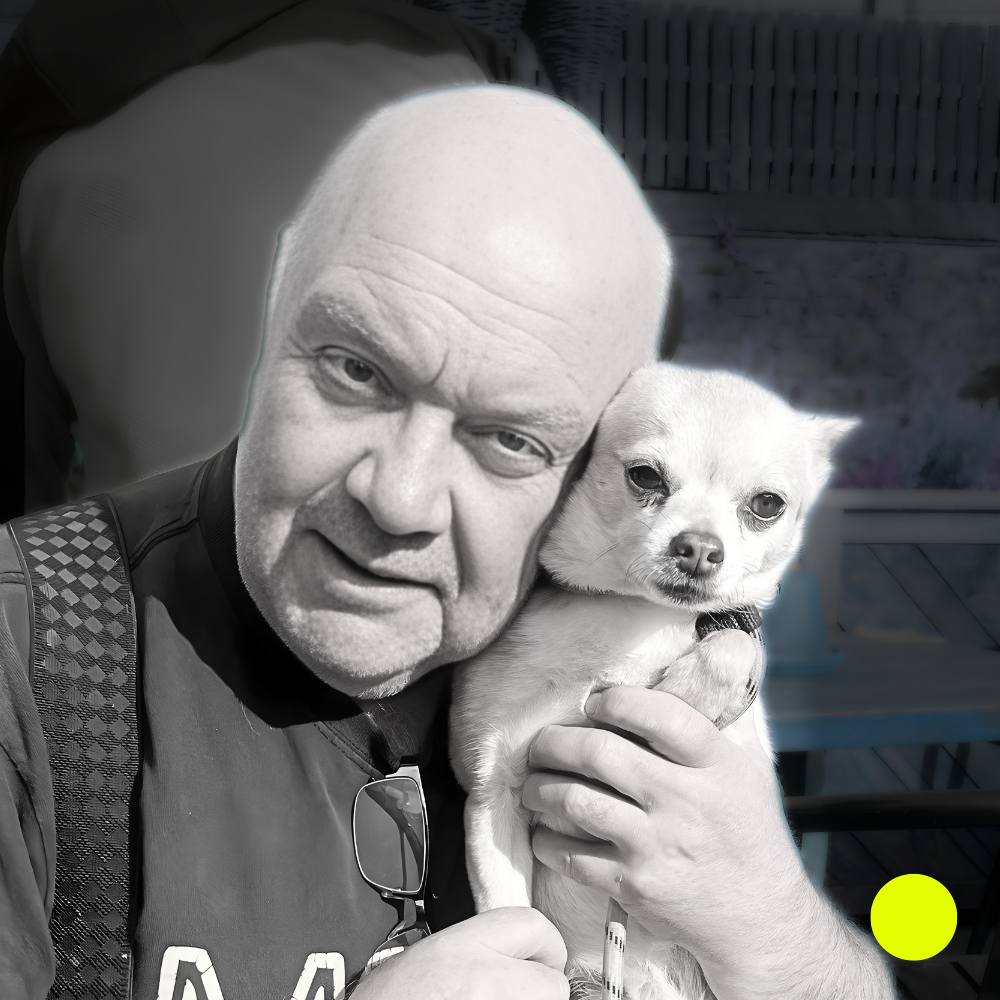
Gary Walmsley discusses pivoting his business away from traditional retail toward high-end, direct-to-consumer wall panels and bespoke commercial installations, while offering unique sampling solutions to help UK customers experience luxury European products.
How did you come up with Designer Walls?
Gary: The idea for Designer Walls actually came about around eight years ago, following a bit of a push from people in the industry to get the KBB world to evolve into KBBH – kitchens, bedrooms, bathrooms and homes. Basically to start thinking beyond these three rooms.
Along those lines, I was buoyed by the input I received after listening to industry speakers and peers at events like KBB, which led us to diversify – and that’s exactly what we did. We started offering decorative wall panels and bespoke surface solutions that could completely transform a space – not just in kitchens or bathrooms, but in living areas and commercial settings too. That really took off, particularly in certain areas of commercial space.
Then COVID hit and the hospitality industry completely shut down. Suddenly, people were investing more in their homes and interior décor just skyrocketed – and that’s really how Designer Walls & More Ltd began and started to pick up momentum.
Unfortunately, just like the bathroom industry I had walked away from, this market's race to the bottom began with certain types of panels.
How has your business evolved over the years?
Gary: I never lost my passion for the KBB industry, especially bathrooms – hence the “& More” side of the business. And I never took my eye off the designer side of the bathroom industry, because I knew there would be opportunities, but I wasn’t sure what that would look like just yet.
There were a couple of things that really pushed the panels business forward. One was fire certification: for commercial projects like hotels, fire safety is key. Everything upstairs must be fire-rated. As a result, many new hotels are now using panels instead of tiles in bathrooms.
That got me thinking about refining our approach to include waterproofing for bathroom refurbishments, with a strong emphasis on quick, quality installations. Finding a way to make panels both waterproof and fire rated really opened up opportunities for us. It meant that the panels could become décor anywhere: bathrooms, kitchens, home offices – you name it.
It also meant that joiners, rather than tilers, were able to fit the panels now – that in itself has become a mini-revolution of sorts in how spaces get transformed. So it’s that combination of functionality and style that really stepped the business up a gear for us.
What sets your offer apart from the industry and what are some of your standout projects?
Gary: Designer Walls can provide decorative glass panels designed for backlighting in almost any design, colour and texture in a wide variety of sizes. We also offer a revolutionary lightweight material called ‘Ultralight’ based on 1.2mm aluminium sheets – from small samples to XXL sized panels – for both domestic and commercial settings. It has a lot of potential, particularly for the super yacht and marine industry.
We’ve been involved in some big commercial projects – sets for Coronation Street, stage props for international performing artists and projects for elite private colleges. For example we supplied all the brickwork props for Burna Boy’s last London concert and those around West Ham Stadium.
We’ve produced over 40 massive panels for a single commercial order – it’s been fantastic working on world-class events at this scale. Of course, a lot of our work goes unseen – clients often want to keep certain elements private.
Design-wise, we can create pretty much anything: from Calacatta marble to bold greens and pinks replicating precious stones, and from aquatic-themed blues to everything in between. The possibilities are truly endless.
You’re passionate about European luxury design; how do you think the UK industry measures up in delivering that standard today?
Gary: I love the industry but I do hate the limits we place on ourselves sometimes. From a décor perspective, we’re on the cusp of something exciting – there’s a little quiet revolution happening.
The UK market is slow to adapt, but it’s partly because European suppliers don’t grasp how products need to be presented here. The challenge is making suppliers see how customers interact with things in the UK, and until EU businesses are willing to grasp that, it’s an uphill battle.
Having had a showroom in the same location for 35 years, we've gained first-hand knowledge about our clients. I look for good solutions that fit a need, but so many times, companies are reluctant to change the ways in which they market the product. I keep hearing we can’t afford to give you that in terms of expenses. But if customers can’t see or try the product, how will they buy it?
How are you working on moving past this roadblock with minimum friction?
Gary: We’ve moved away from retailers and now work directly with the customer. The key is understanding the market and the customers, and making sampling low-risk. For example with suppliers like Depro Profiles, Form at Wood and Tecnografica, we created sample boxes containing a nice cross section, so customers could try them at home. We loan these samples out for a fully refundable deposit.
With Maier and Swarovski, we’re trying to take a similar approach but it has not been easy. I asked them for a selection of tap heads so I could rent them to clients – like renting a diamond. They’re filled with Swarovski crystals, very beautiful. People will spend on these taps if they can see them in person, but manufacturers just don’t get it. It’s just really hard to make them understand how important it is for customers to physically experience the products.
There’s also a lot of hand-holding and flexibility involved at every stage. Some European suppliers don’t fully grasp how the UK works, so I often have to step in, read their emails, and help move things along myself. They are trying hard, but often they’re slow to reply or pass the query on to someone else, so it’s important to guide the process carefully.
On the other end, we have to make sure the customer can experience the product before committing, so we guide them through the process in stages. Stage one, they like the product. Stage two, we discuss exactly what they want to achieve in their bathroom or kitchen. Stage three, they try the actual piece, paying a small rental fee, which can be credited toward purchase.
Why have you decided to sell your wall panel portfolio exclusively to end users?
Gary: There are a couple of reasons. The market is slow right now, and high-end designer wall panels are expensive and niche. That’s why reaching customers directly is key – it ensures these thoughtfully designed products actually get into homes where they can make a difference.
How do you see Designer Walls evolving in the future?
Gary: I’ve certainly not finished with the bathroom industry – we’ve got niche commercial projects in the pipeline. There is a particular one for Leeds University at the moment where we are providing a specialist type of glass – it’s beautifully versatile and can work as a feature on kitchen islands too. We’ve recently finished working on a luxury home installing an impressive outdoor bathroom feature. So we’re focusing more on specialist or commercial projects now.
It’s still very uncertain out there, but we’re lean now as a company which certainly helps.
At the same time, I’m starting to think about retirement, so the plan is to concentrate on select, standout projects rather than taking on everything that comes along.