
Joanne Jeyes
Founder, Joanne Jeyes Interiors
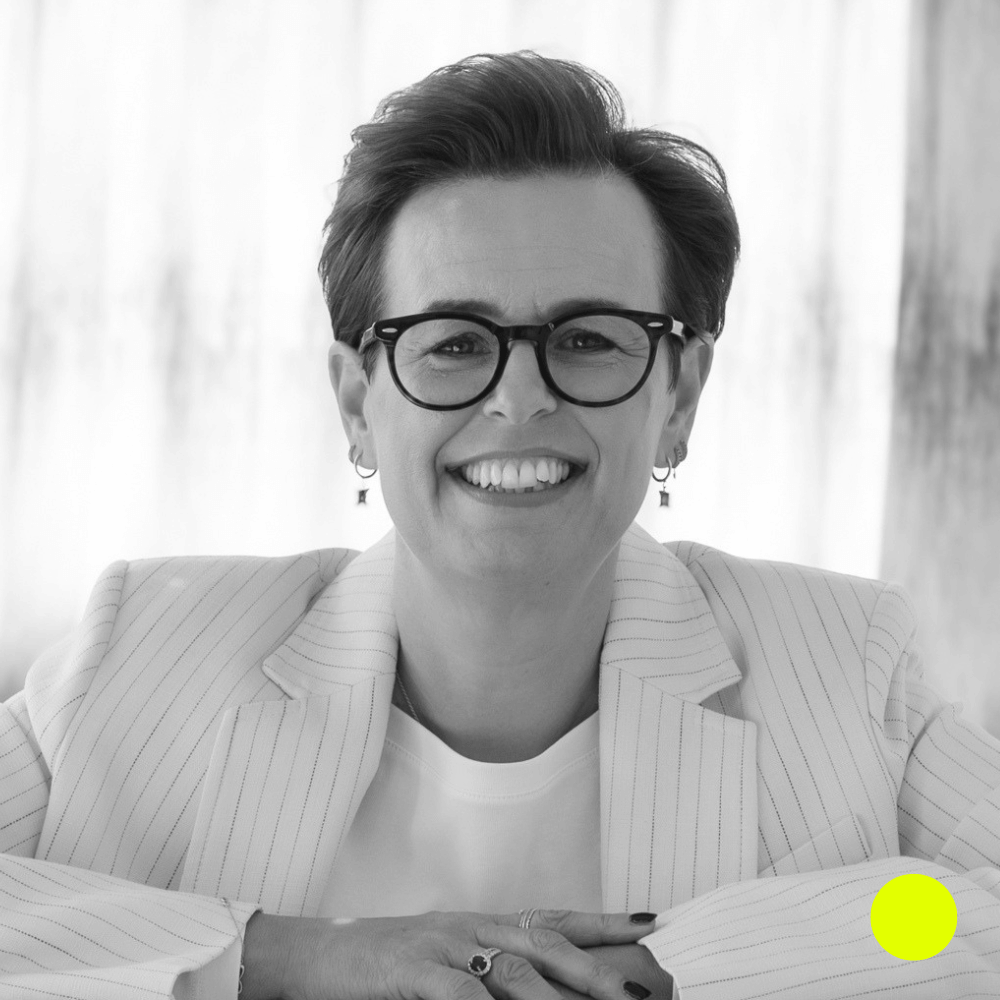
Interior designer Joanne Jeyes discusses her transition from journalism to specialising in accessible and neuroinclusive home design, sharing insights on business growth, client trust, affordable future-proofing, and the need for the wider industry to embrace functional, non-clinical accessibility.
Tell me a bit about yourself and your business — how long have you been designing interiors, and what made you want to build a business around accessible and inclusive interior design?
Joanne: Interiors have always been my thing. Originally I was an interiors journalist, so I used to write for weekly and monthly women's magazines back in the 90s.
We moved to Singapore, had children, and came back to find the market had changed quite a lot with magazines. They had just become a different beast, and I'd lost many of the contacts I’d built up.
We had bought a very unusual building at the time to turn into a family home — it was a Nissen hut. While I project managed its conversion, I took a diploma in interior design and then started the business in 2019.
I realised I was approaching design slightly differently to other people. I was always thinking about how to create spaces that were beautiful, practical and that worked for different people, bodies and brains.
Then, when my mum, who had dementia, came to live with me for a while. That really opened my eyes to how difficult it was for her.
I had thought we were in the ideal set up — we had a big downstairs bedroom and bathroom with a walk-in shower. But I realised quite quickly we weren’t.
My middle son has Down syndrome and autism, and I could see the similarities in sensory struggles between my mum and him.
My dad was partially disabled before he passed away, and we've got good friends that have different physical disabilities.
I think it's simply the world I live in, so the business grew naturally around it. I attracted neurodivergent people, or people who were looking for adaptations, so I decided to specialise in those areas.
The dementia side is growing, and I think that's probably more of a consultancy service. People often struggle when a family member is living with dementia, and they don't necessarily want somebody coming into their home and suggesting huge changes, which I absolutely wouldn't do. I know there are small changes you can make that can have a big impact on how someone with dementia feels in their home, so I'm looking at ways to develop that at the moment.
But I’ve gone from interior writing to interior design to really niching down into accessibility and dementia.
Whom would you not work with and why?
Joanne: I don't think there is anybody I wouldn't work with, provided they're open-minded and willing to listen.
It's often surprising when I've worked with someone that the first thing they say to me is, “Why aren't people told this? Why don't we know this already?”
I would encourage people to be open-minded when they work with me.
I do often find that people have stereotyped me. Because I'm an interior designer, they assume I'm just there to talk about curtains and colours.
Some project managers, architects or trades think I'm going to cause trouble or stop them doing their job. “Oh, she's going to be like the health and safety police,” something like that.
Every single time that's been felt, within a week or so, they've turned around to say, “The whole thing, the whole feeling is so brilliant. Why aren't we all doing this?”
For me, it's important that we share the knowledge, because accessibility isn't just about disability. People have accidents, develop illnesses, become parents, grow older, or simply find that their needs change.
I think the earlier people take accessibility into account, the better.
What do you predict will happen to designers and businesses that don't take accessible design seriously?
Joanne: I think they’re going to fall by the wayside, rather like businesses that have been reluctant to embrace AI. Change is already happening.
There are over 900,000 people who have dementia; I think they're expecting that to rise to 1.6 million by 2040. If you're going to ignore that huge market, I think businesses will be doing themselves a disservice.
There's also a kind of eye roll when you talk about neurodiversity, but it’s one of those things we're now understanding and accepting. So to ignore it would be short-sighted.
But it’s also true that it's difficult to find out about this stuff — it's difficult to learn, it's difficult to figure it out.
The biggest plus for me is that I'm open to sharing my knowledge; I'm not keeping it to myself. I'm very happy to share it with whoever needs it because I'd rather people live better, having seen how badly some people live.
How has niching down so drastically affected business, and how have project dynamics changed?
Joanne: The biggest impact is how I show off my projects and discuss client work — it has changed completely.
Firstly, projects don't necessarily look the way people expect accessible design to look. And what I'm trying to show is that they can still look beautiful, warm, deeply personal and exceptionally well designed.
I don't encourage people to rip everything out and start again because you don't need to. And if you can get in early enough, you shouldn't have to.
Secondly, because of the type of clients I have — they've had life-changing accidents, they've suffered a stroke — it's not really my place to discuss that in the public realm.
Finally, getting decent pictures of products within the places that I'm working on is probably the hardest thing. There are some lovely products out there — I saw a fantastic grab rail at an exhibition recently and I just can't wait to use it because it looks so lovely. But whereas before I could just say, 'Look at this lovely three-bedroom house and this six-bedroom villa,' I can't do that now.
The biggest change to the business is I now take on much bigger projects with higher numbers attached to them, just by their very nature. But they take a lot longer. I've got a project that I've been working on for two years; I've got another one now that I'm nine months in but it won’t be done for another year. So it's a much slower project build because there's so much involved.
Being a solo designer can be lonely work. What are some practical tips for self-management?
Joanne: I hate to say it, but networking. Networking doesn't come naturally to me, but it's incredibly important. You've got to talk to people who are doing your job.
I'm very much a sharer — I didn't use to be, but it's something I've learned as I've grown older.
We all get protective about our knowledge and our clients and what we're earning and all of that. But I've learned that if you open that out for discussion, especially with women — we can support each other.
So I think that's a huge thing: meeting people who are doing the same thing as you, even if it's in a different niche.
I try to meet with other interior designers, photographers, makers and, really, anyone creative.
The biggest thing that I really do need to change is the hours I work. I can sit down at 4 o'clock and work until 8 when I only meant to do one hour. I think as a sole business owner, you answer that message at 9 o'clock at night, and you really shouldn't. It's really not good for anybody.
So my biggest tip is to set boundaries for yourself and your clients.
Tell me about some of the deliberate decisions behind your online presentation and how they've helped you attract the type of customers you want.
Joanne: That's a tricky question. I always knew I wanted to build an audience or find my tribe that really got me. I didn't want to have people following me just because I'd put out a pretty picture. That's quite difficult at the moment because I'm talking much more about dementia. There are a lot of people looking for information and support, but I also want people to understand that I'm a designer. My role is to help people create homes that are beautiful, practical, thoughtfully designed and supportive.
I've consciously not gone big — I don't advertise very much, I do local advertising more than anything else. I think about who I really want to contact me.
If my online presence was loud or chasing viral reels, it would give out the wrong signal. It would say, 'This is about me and my design portfolio,' when actually it needs to say, 'I'm a trustworthy person, you can talk to me, we can have a cup of tea, I won't overwhelm you.’
For me, calm isn't necessarily the absence of having a strategy; calm is the strategy. People are coming to me for a reason — it's not because they've seen I've put up the nicest wallpaper from the latest designer, they've come to me because they know I get it.
I need people to trust me because genuinely, people who have got dementia are already struggling. If they’ve had an accident or a disability has got worse, they've already got a hell of a lot to deal with. They don't need expensive kitchens that are going to look amazing but not function for them.
So I want my website to be steady, not flashy — I want people to say, 'She's talking to me.'
Even something as simple as the colours on my website was carefully considered. I think about colour slightly differently because I understand the effect it can have on mood, perception, concentration and even the way we navigate a space. I understand how changes in sight can affect the way we experience colour, and I also consider the needs of people who are neurodivergent or living with dementia.
I worked closely with a branding company on the rebrand, and that process was a real turning point for me. Moving from Crocus Interior Design to Joanne Jeyes Interiors felt like taking ownership of the business and the direction I wanted it to go in. It reflected the fact that I had become much clearer about who I wanted to help and how I wanted the business to grow.
Rising costs have affected suppliers across the industry. What are your top tips to put together affordable project quotes without lowering your standards?
Joanne: I always say to clients: think about the future. Focus on flooring, lighting, and worktops when it comes to kitchens, because they're the things that will get the most wear and make the biggest difference to everyday life.
I'm always looking for companies that have good prices — particularly affordable internals — but it’s so difficult. For example I will always say to people that I want to specify kitchen pull-out drawers, but they're two to four times the cost of a cupboard.
So I have to explain to clients that this is really about future-proofing. Good design isn't just about solving today's problems; it's about anticipating tomorrow's needs as well.
People don't always know what their needs will be in five, ten or twenty years' time, but simple decisions, such as including more drawers instead of cupboards, can make a huge difference to how easy a home is to use in the future.
You can save money on perhaps carcasses. Sometimes you can go for the more economical options, but I always want quality above quantity.
So I would say change what you can, adapt what you can't. Maybe change the handles and the hinges and add some internals rather than rip out the whole kitchen.
Again, flooring, lighting, and worktops are the things that you should spend the most money on, but it’s so difficult. For example a client I'm working with at the moment — every worktop we look at is so much more expensive. Flooring has become expensive again; everything we're looking at seems to have doubled in price.
Who is your favourite accessible products supplier and why?
Joanne: I work a lot with Symphony — I think what they're doing in the accessible kitchen world is brilliant, and they're at a good price point.
I met Adam Thomas about five years ago at a KBB exhibition — it was the first time I'd spoken to somebody who was speaking my language about accessibility. He was very proudly showing me the kitchen he'd designed for Symphony, and since then we've just kept in touch.
Now every time I look at not using Symphony, I realise what they've got is actually something that works really well. They're creating kitchens that are beautiful, functional, stylish and genuinely accessible.
Just the rise-and-falls they do are really good. Adam has just designed this clever rise-and-fall right-angle breakfast bar — and you just think, 'Yeah!'
They've got this fantastic tap they introduced me to — it was a sensor tap that did all sorts of useful functions that would be ideal if you have accessibility issues.
I like that they push it; I like that they market it well. It's not in the back of their showroom hiding — their Freedom range is out there being shiny and lovely.
What tech and software do you use that helps you run your business more effectively?
Joanne: I use SketchUp for all my basic 2Ds and 3Ds because it took me so long to learn! It's a beast of a thing to learn — I hated every minute of it. So now I've got it, I've got to crack on with it.
I do think there are probably better rendering models out there; I just don't have time to learn them now. It's more out of habit.
Caption.Ed is my note-taking software. As somebody with ADHD, it has been incredibly useful because it allows me to concentrate fully on the conversation rather than trying to listen, process information and make notes all at the same time.
And then I got myself a VA. Oh, that's been brilliant! She takes care of much of the work that happens quietly in the background, from administration and newsletters to ManyChat and general organisation, which frees me up to spend more time with clients and on design work. So I think when it comes to tech, it was actually a real person that's been the biggest help!
Bringing Laura into the business has made a huge difference. She takes care of much of the work that happens quietly in the background and helps keep everything organised, which frees me up to concentrate on clients and design work.
I've also started working with Amber, who is studying interior design. I hadn't realised quite how valuable it would be to have somebody else in the studio from time to time. Being able to exchange ideas, talk things through and share knowledge has been incredibly helpful, both personally and professionally.
I do use AI as part of the business as well. Like any tool, I think it's about understanding where it can help and where human experience and judgement are still essential.
If a young designer came to you asking for guidance on setting out on her own, what immediate, practical steps would you ask her to take?
Joanne: I'm actually doing that at the moment, as I'm mentoring Amber who is studying interior design, so these are exactly the conversations we're having.
Anybody coming into this business has to take AI on board and how that might change what they're doing.
So I literally said to her: 'You need to really learn SketchUp or another modelling software. You also need to look at AI and consider where it is going to fit into your new role, because it's going to change a lot in the next few years.’
Also, get experience within a business. Running the business has been the hardest thing for me. I can happily do interior design all day long, but making sure it runs as a business that's profitable and not just a creative business — that's been the hardest thing.
You don't get taught that in your diplomas and degrees. I did a business course a couple of years after I did my diploma, which kind of helped.
What most people don't realise is that we end up getting very close to our clients — we become trusted confidantes. So you have to be comfortable talking and listening, and really getting to know people. Especially when you're doing the type of accessibility design that we do, you have to ask really difficult questions that are really personal.
If it was somebody who wanted to do the same kind of design as I'm doing, I'd say: get comfortable with having those conversations. Understand that asking somebody, for example, how they use the bathroom isn't embarrassing — it's actually a really important part of their day, and it will make their life so much easier if you understand it.
But it is difficult to get your head around that. So find your niche, whether it's accessibility or not, and really learn it well.
Where do you want the KBB industry to go in the future and what part do you want to play in it?
Joanne: I would love to walk into any showroom and find an accessible kitchen or bathroom in there. I would like at least one member of staff in the bigger showrooms to understand the difference between somebody using a bath who has full mobility and someone who doesn't.
What I would love to do is work more closely with manufacturers and showrooms, helping them create spaces that are not only accessible, but beautiful, commercially viable and genuinely welcoming. I think my experience allows me to bridge the gap between design, accessibility and lived experience in a way that's still quite unusual within the industry.
Most people in the KBB world work primarily in either design or accessibility. I happen to work across both. So I want to share that knowledge with fitters and designers and show them that it isn't just about hospital-style adaptations and show them that accessibility isn't about clinical spaces. It's about creating homes that are beautiful, practical, warm and welcoming.
I'd also like to see these conversations starting earlier on when people are developing public spaces as well as individual homes. Think of accessibility early on — stop treating it as a niche and an add-on.
I would love to see accessibility become part of what the whole KBB industry thinks of straight away, rather than afterwards.
The numbers tell you it isn't a small specialist concern — it's huge, it's growing, and people with disabilities buy kitchens and bathrooms. Where do you think people are going if they're not coming to you?
Making showrooms more accessible and showing that they want people to come to them — that's where I think I could help. Having a small area in the showroom that says, 'We can come out to you, we can send our specialists out to you,' would be a huge step forward. I'd love that to happen."
What’s something the KBB community doesn’t know about you?
Joanne: One thing people may not know about me is that I spend a great deal of time sharing information. I've written guides to living well at home with dementia, I volunteer at a dementia café, I regularly share information on social media and LinkedIn, and I'm always happy to help people find the support they need.
I genuinely believe that the more we talk about accessibility and dementia, the better. There are lots of small changes that can make a huge difference to people's everyday lives, and I think that knowledge should be available to everyone.
I enjoy speaking about these subjects because I think the industry still has a great deal to learn, and I'm always happy to share what I've learned through both my professional and lived experience.
If retailers, designers, manufacturers or members of the public want to know more, I'm always happy to have a conversation. I don't believe in keeping knowledge to myself.
I always tell people to stay curious and keep asking questions because that's how things improve.
I think good accessible design should be so well considered that people notice how beautiful it is before they notice how practical it is.