
Justine Bullock
Owner, The Tap End
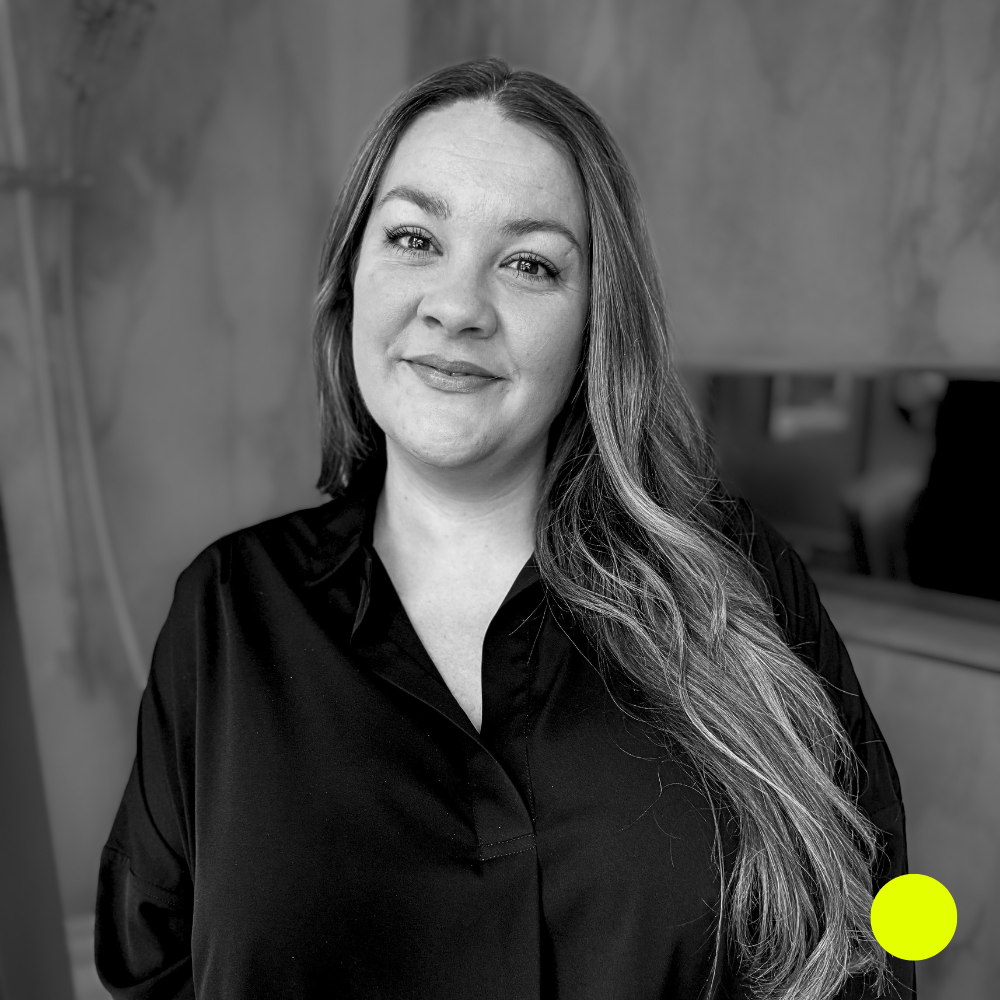
Justine Bullock shares why real-world solutions – not just flashy finishes – win client trust, and how her team is carving out a niche in a crowded market.
How did you come up with The Tap End?
Justine: The Tap End was actually born out of frustration! I originally went to university to study fashion design – it’s what I’d always wanted to do. But working in the industry, I saw how cutthroat it was, like what you see on TV. It just wasn’t for me.
I quickly transitioned into interior design, working in a management position for an interior design company. Part of that business used to do high-end bathrooms, and I fell in love with how technical bathrooms were and also how profitable they could be.
At that time, most bathroom companies were focused on “0% interest” and “cheap and cheerful” solutions. There was a clear gap in the market for design-led bathrooms. Being Welsh and from The Valleys, I’m a home bird at heart, so seven years later I left to set up my own bathroom design studio – and The Tap End was born.
What have been some of the highlights since starting the business?
Justine: This past year has been one big highlight! One of our designers, Zoe, had projects featured in magazines such as Ideal Home, Living Etc and 25 Beautiful Homes. A couple of her projects also went viral on social media.
That made me unbelievably proud. Because Zoe has also come from a fashion background, we both know the thrill of being featured in a high-end magazine, so receiving this kind of critical acclaim is like the equivalent of being in Vogue!
Everything we do is a team effort. When one of us succeeds, we all succeed, and that’s something I’m really proud of.
What are some common mistakes you see repeatedly in bathroom design?
Justine: One very common mistake is that people buy bits and pieces online or just follow what the plumber says. They think they can get a designer bathroom for £5,000 and it’ll last decades because their previous bathrooms did. But the quality of 30 years ago isn’t the same as today. That’s when they come to us, wanting to do it properly.
Why do you think this keeps happening?
Justine: Customers think they’re saving money … it’s the “too good to be true” mentality. Even when they know deep down it won’t work, they still go down that road. But without tried-and-tested products or designer advice, you might only get five years out of a bathroom today. Things delaminate, finishes rub off, and ultimately, it ends up costing more.
So, what's your secret to winning over clients?
Justine: It’s difficult and frustrating but trying to convince people ends up sounding like a sales pitch. So we don’t do the hard sell at all. Instead, we rely on reviews and word of mouth. Clients who’ve had a good experience share it, and that’s far more powerful than us telling people what to buy.
You’ve become known for some very practical yet beautiful bathroom solutions; how are you doing it so well?
Justine: All of us in the showroom are female. Between us, we have children, dogs, busy homes and more. We clean our homes, we look after our bathrooms and we make sure that our clients don’t have to face any problems that we’ve had ourselves.
Anything clever we do comes from a bad experience in our own previous homes. For example, in one of my old houses, there was only an overhead shower. I hated it, because with curly hair, I couldn’t shower without getting my hair wet. So if a client says, “I’ll just go for the overhead,” we discuss why having a handheld shower is important.
Even a simple thing like always ensuring there’s a mirror at the right height makes a huge difference. We’re passionate about giving customers not just what they ask for, but what they need. Otherwise, we’d miss opportunities to really impress them.
How do you ensure functionality enhances, rather than detracts from, aesthetics?
Justine: We believe in holistic design – bathrooms should never feel like an afterthought. Our approach is all about integrating practical needs seamlessly, so only the client knows why a feature is there.
For example, we often design tiled shower seats. A client might need it for mobility or future-proofing, but instead of a plastic fold-away seat, we integrate a fixed, permanent solution that is both highly functional and aesthetically pleasing.
What makes your design philosophy unique?
Justine: We approach every project with a fresh lens because we truly believe that every customer is different. Nothing we do is ever exactly the same. Our aim is to make every client absolutely delighted with the end result.
You have worked extensively with small bathrooms; what’s a myth about small space design that you often correct?
Justine: Small space design is like a jigsaw: every inch counts, and products need to lock together. While it might look like you can’t do much, with the right product knowledge, you can do a lot.
Clients often think they’re stuck with what they’ve got, saying, “I just need new stuff, I can’t have a different layout.” But even in a small bathroom, there are always options.
What’s one practical tweak that makes a bathroom feel instantly luxurious without major renovation?
Justine: Lighting. Most bathrooms just have one central light or too many spotlights. But at night, when you’re relaxing in the bath, you don’t want ten spotlights above your head. Or in the morning when you’re getting ready or putting on your makeup, a single dim light is not enough.
Balancing lighting and having options for day and night changes everything. It’s the most important thing, whether it’s an update or a full redesign.
What’s an industry-wide blind spot that needs a rethink?
Justine: We need to shift from treating the bathroom as a siloed, purely functional space. Often, a client might have a bright, colourful, plant-filled living room, but their bathroom is a grey tiled box, designed in isolation from the rest of the space.
Bathrooms should tie in with the rest of the home, reflecting personal taste. They should be both practical and enjoyable, not just a room you shut the door on.
Where do you see The Tap End pushing boundaries next?
Justine: Right now, we’re focused on making bathrooms more personal and less ‘bathroomy.’ We’re a Welsh company, and our area doesn’t typically have a strong design presence. Bringing design to this part of Wales has been incredibly rewarding.
We’re always trying to introduce something new: each month, we hold a ‘show and tell’ where we share ideas from magazines or online – like creating surfaces for plants, integrating coloured vanity units, or adding bespoke details neighbours won’t have. It’s about making bathrooms feel like part of the home and people have been very receptive to this concept here.
If you could go back in time and do it all again, what’s one thing you’d do differently?
Justine: Honestly, nothing! I’m really happy with where we are.
We’ve been through tough times – we were only three years old when Covid hit, we opened and later closed an installation company, and my business partner retired this year. But I don’t sit on problems; I like to figure things out myself and I make decisive choices.
Even though the economy is challenging, I focus on making sure my team, myself, and our clients are happy. I’m fiercely independent and everything we’ve done has led us here; I wouldn’t change that for the world.
If anything, perhaps I could listen to advice more. But I’d encourage anyone thinking of starting something design-related in their hometown to go for it, even if there’s no design culture yet.