
Michael Bamling
Owner, Chiaroscuro Lighting
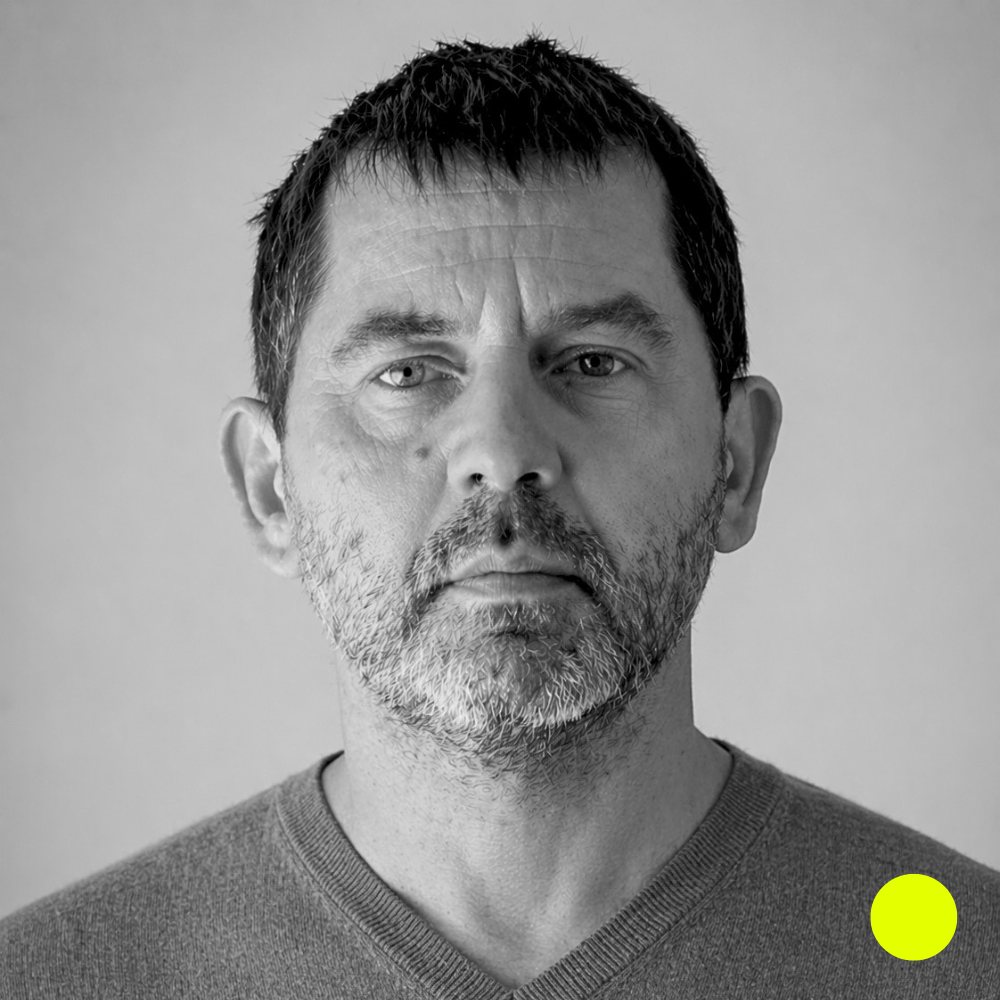
Michael Bamling shares how he transitioned from traditional electrical installations to founding Chiaroscuro Lighting, advocating for early-stage lighting design that treats light as a creative, human-centric experience — one that transforms residential interiors without excessive cost.
Tell me about yourself, what you do, and why you set up Chiaroscuro Lighting.
Michael: I've been involved in the electrical industry for 40-plus years now. A lot of that has been for new-build national housebuilders.
Over the years we've done thousands of homes, but the problem was every one was a carbon copy of the last one. The options were always: let's put more lighting in, let's put more spotlights in, let's load the space with light.
Especially from a kitchen perspective, it's the focal point of the home, what we found was they were just bright. They were overkill. Everything was designed for daylight, for how a space feels at midday.
I've always thought there's more out there.
About ten years ago I was at an art exhibition in Mayfair, London and I met an artist, Vince Kamp. His work is dark and moody. We got talking about light and shadow and atmosphere, and all of a sudden something just clicked. I realised I could do with light what he's creating from an artist's perspective.
At the time, the technology was only just starting to emerge. Before then, we couldn't really do it because the technology wasn't there. Over the last ten years it's caught up with the ideas in my head, and I've spent that time experimenting, playing with things, researching and learning the background to it.
What I do now is look at lighting from a creative side rather than a functional side.
With a kitchen, I can make it beautiful and warm when you're sitting there at night having a drink. When you need it bright and functional, we can bring that in too.
But because of what we can now do, we can push the boundaries. Rather than having a light source on show, let's hide it. Let's build it into the joinery. Let's hide the source so you get that beautiful glow and beautiful light, but you don't see the physical glare and you don't know where it's coming from.
Psychologically, your mind doesn't realise where the light is coming from, but it creates beautiful effects.
I'm always outdoors and I live in the countryside. My son lives in the Highlands of Scotland, he's a gamekeeper, and I go up there and see the change in light, see what nature does with it. You can look at the same space five days in a row and every day you'll get a different view, a different perspective.
Everything is to do with the light.
Most people don't realise how big an impact light has. I see beautiful spaces where the light is wrong, and it just ruins the space. The more I get into it, the more detail I start to look at. There isn't one answer and there isn't a one-size-fits-all solution.
A lot of designers are trained in design. They put what they think into the computer, and the computer spits out something functional, something that works. That's great.
But I want to bring creativity into it. I want people to walk into a room and think, "Wow, this looks great." Then, with the flick of a switch, all of a sudden it's a totally different room.
Do you have a team?
Michael: Most of it's just me. I had an electrical company when we were doing new-build work, and I've got guys that work for us as subcontractors. But a lot of what we do now is on the design side.
I'm an electrician by trade, so I can look at a space and think, "Yeah, cable here, I'll put a light there."
I can see behind walls, it's a bit like having X-ray vision. I know where the joists are because I understand building architecture. A lot of designers will say, "I want a light there," but sometimes you can't get it there because of the constraints of the building.
I'm trying to move away from the installation side and get more involved with the design side. When we need to do installations, I have good guys I can bring in. I still do some work myself, probably because clients keep requesting it, but really, it's something I want to build up. I don't want loads of work. I just want some really nice clients, to work with people I enjoy working with, and have a nice life off the back of that.
I've closed down the electrical company and moved more into Chiaroscuro, which is the lighting side.
You have a very specific sub-niche within a niche. How has narrowing your focus affected your business?
Michael: The problem I've got is that what we're selling isn't really a physical product. We sell an emotion. We sell a feeling.
It's a hard sell.
From those initial conversations with clients, we've got to build trust and build rapport. We need to really delve into the client and learn about them. We're not turning up with a big portfolio and saying, "Here's my last project." Everything we do starts from scratch with that particular client.
Rather than a client saying, "I'm getting a new kitchen, can you put some lighting in?”, we ask: How are you going to use the kitchen? Who's going to use it? What times of day? How do you spend your time in the bathroom? Do you just go in at the end of the day, have a quick shower, and come back out? Or do you go in there to relax? We've got to build that picture first.
Once we've built that picture, it gives us the option to go away and design around it. It means we need to start talking to the client much earlier, and the same applies to the designer. The designer can give us a brief and as much information about the client as possible.
Everything I do starts with the end product. I've already got a picture of the finished result in my head, and then I work backwards to create it. Rather than building something and then sticking lighting in at the end, we've got to flip the process around.
Does that make things tricky for you?
Michael: Probably, yes.
The initial reaction is always: "A light is a light. A kitchen is a kitchen. An oven is an oven. A bath is a bath." But each of those things serves a purpose, and what matters is how somebody feels about that experience. That's what we sell. We sell an experience.
We could just go mainstream and pick up a lot more work, put everything into a computer and let the computer tell us we need six spotlights in here. Use standard strip lights from kitchen manufacturers and follow the typical approach. But that creates a generic, one-size-fits-all end product.
But for me, it's not about money. It's about building something timeless.
I want to create something that, ten years from now, still looks amazing. You can change the furniture, change the wall colours, change different elements, but you still walk in and think, "Wow, this space just feels right."
We do trade shows and lighting shows and speak to lots of people. Last year we attended one of the biggest lighting exhibitions in Europe.
What we're seeing now is that maybe 90% of people still think in the traditional way. But there's another 10% who have started to understand what we're talking about.
There is a growing movement within the lighting industry that says we need to start designing for the human experience. Maybe we're still a little ahead of the curve, but I think as time goes on, everybody else will start to catch up.
Why do some high-end interiors still feel disappointing after dark?
Michael: A lot of lighting design is generic. The conversation hasn't really happened about how the space is going to be used, what materials are being used, or what views the room has.
You might have a beautiful garden outside. You might have a fifth-floor apartment with an amazing terrace. Then, after dark, we seem to go back to lighting purely for function. We turn the light on and simply illuminate the space.
We need to move away from that and start considering lighting as a creative tool. Something that creates the human experience.
That conversation needs to start early.
Generally, we still fall back on the idea that "a light is a light." But you've got light colour, warmth, coolness, colour rendering. Different colours react differently under different light sources.
You can have a beautiful wall colour, a beautiful sofa, a beautiful kitchen, but if the colour rendering is wrong, the experience disappears once it gets dark. A beautiful red can suddenly become brown. Blues don't show up properly.
We're designing for daylight because we live in a social media world where everything is photographed at midday.
But we don't actually live in our homes at midday. For much of the year, we're using our homes after dark. Yet we don't design for that after-dark experience. Beautiful spaces in daylight, but daylight is only half the story.
And the frustrating thing is that it doesn't have to be expensive. You can go down the expensive route, but even something as simple as using anti-glare light bulbs in table lamps makes a huge difference. You don't get that harsh glare in your face.
You can also use dim-to-warm lamps, where the light becomes warmer as you dim it down. When it's bright, it's functional; as you dim it, it becomes softer and more atmospheric. Even things like that can bring all of this into a space at a relatively small cost.
A lot of what you can do with lighting can also be retrofitted. You don't have to go for the full experience immediately. What you normally find is that once clients start with a little bit of it, they think, "Wow, this looks great. Where can we go next with it? How can we take it further?"
I think 95% of people never give the nighttime experience a thought.
Everything is designed for daylight, and then nighttime becomes an afterthought. People think, "We just need it bright." But we don't. We want a space where you can relax and enjoy being there.
Sometimes a space just doesn't feel right, and people don't know why. Often, it's the lighting.
If an independent retailer or designer came to you and said, "I know lighting is important — what can I do to protect my margins while still creating a specific mood?" What would you suggest?
Michael: Most of the products on the market come with options across different budgets. You've got the top-end solutions, but you don't always need 100% of the premium product. Often, there's something available that delivers 90% or 95% of the effect for a much more affordable price.
Take spotlights, for example. There are retrofit light bulbs available for around £20 that can deliver an effect comparable to a £200 spotlight, particularly in terms of colour rendering.
The conversation is the important thing.
Most people think they understand lighting, and then immediately decide to go with the cheapest option. The problem is that the cheapest option is usually very substandard.
Sometimes it's better to be selective about where you spend your money. Maybe there are accessories or finishing details that can wait six months, instead, put that money into the lighting.
You don't have to do everything right now. You can put the infrastructure in place now and add to it later. But the key is to have the lighting conversation early. Create a budget that includes lighting from the start. If you leave it until the end, all the money has already been spent, and people end up choosing generic fittings.
The reality is that with a better-quality product, you can often use fewer fittings. For me, every light should serve a purpose. Rather than putting twelve spotlights in a kitchen and six in a bathroom, think about what you're actually trying to light.
You might only need three lights in a bathroom. Position them strategically, place them near a wall so the light washes down the surface and makes the wall a feature, rather than putting them in the middle of the ceiling where they don't really achieve anything.
By being creative, you can use fewer fittings, and those fittings work much harder for you.
There are plenty of options available to suit different budgets, and you can often create a much better effect for the same overall cost.
Very broadly — what percentage of the overall budget should be allocated to lighting in a kitchen or bathroom?
Michael: I'd say somewhere between 5% and 10% of the overall budget.
For a £40,000 kitchen, to do the lighting properly, you're probably looking at £2,000 to £4,000. You can bring that down if you're working at the lower end of the market, you could still do something really impressive for £1,500 to £2,000.
For a bathroom, roughly the same principle applies. It does differ depending on where you are, up here in the North East, we've got a different marketplace. People don't always want to spend the money.
Going back to lighting, I think 5% is a really good starting point. In context, it's not a huge amount of money, especially when lighting can make or break a room. If the lighting conversation happens early and gets built into the budget from the beginning, you don't end up in the situation where everything else has been paid for and lighting becomes an afterthought.
What people don't realise is that a standard spotlight often has a very wide beam angle. By the time that light reaches two metres from the ceiling, it's lost much of its impact. A quality fitting is completely different, at two metres, it's still delivering a beautiful, controlled light.
You can build coves into bathrooms and hide lighting sources. Good-quality LED strip lighting might cost £20–£30 per metre. If you've got ten metres, that's only a few hundred pounds, yet that hidden lighting can completely transform a bathroom.
Then you've got lighting controls. There are some really good systems available now. It doesn't have to be a full-house lighting control system, there are companies producing solutions where, with the press of a button, you've got different lighting scenes and settings. You can create all of that for a few hundred pounds.
The challenge is that people don't know what they don't know. They immediately assume lighting is going to be expensive. But if somebody like us brings these ideas into the conversation right from the beginning and explains that for around 5% of the budget you can create an amazing bathroom or kitchen, people start to understand.
In the context of the overall project cost, it isn't a huge spend. But the difference it makes is night and day. It's often just as expensive to do it wrong as it is to do it right.
And this is where designers benefit too. If you create a home that a client absolutely loves, that client becomes an active advocate for your business. They're going to tell their friends. You can have two bathrooms with exactly the same suite, the same shower, the same worktops, one space feels amazing, the other feels like a doctor's waiting room.
The return on investment for the designer is getting clients actively advertising afterwards on Instagram: "I've got this amazing kitchen, this amazing bathroom, this company did fantastic. They designed everything for it. Then we took our contractors in to do the work.”
All of a sudden, it's really good advertising by getting it right. And the lighting is the main thing.
I’ve been to a lot of kitchen showrooms where the lighting is terrible. I've walked in and thought, do you not think?
They often say, “Oh, we just get the light bulbs and stick them in.” My argument is, you’re selling a £50,000 product. How does that track?
We don't accept this when we buy a car, yet with our homes we do. We would actively upgrade the lights on a car, LED running lights, another £1,500. The clients would actively pay that.
I think it's because we don't have the conversation with the client on the budget. The client understands what the item is going to cost, but they've got this end product that they know they're going to get.
Why don't you just show clients a render?
Michael: I try not to do renders and visual images of the exact room. I want to build that feeling in the client's mind, how that space is going to feel. Renders are a different interpretation. And it's the same with showing them a previous project, I don't want them to have what somebody else has got.
My clients are unique. I want to give you what's right for you.
When you work purely visually, they'll say, "Well, it doesn't look anything like this." By talking in words and building that picture up, you build out the experience of what they can get and what they can have.
The visuals I do use are just a loose interpretation of an atmosphere, a feeling, or an emotion, rather than a photorealistic piece to finish along with.
The images I put on LinkedIn, I try and go with the warm homely feeling.
That's not how the space feels all the time, but when you want it, your ability is there to have it like that. You've had a hard day at work and you just want to go and relax in the bath and turn the lights down low.
I try not to be too technical. I don't want to appeal directly to technical people.
I want anybody to be able to understand.
The average client says, "I don't understand technical." They want to know: How am I going to feel? What's the physical interest? Why is it this, why is it that? By talking in words, you can answer those questions.
Where do you see lighting design heading?
Michael: The big thing now, and this goes back to Light 25 last year and the mood in the industry, we're all starting to move to circadian rhythm. Starting to understand the sunrise, midday, and sunset. How our bodies actually change through the day. Internally we've got a body clock that adapts to that.
From the wellness side of it, this is going to be, for me, the biggest design influence in the coming years.
We've got sports stars, performers, top executives, we go for every edge we can for wellness and recovery. But the biggest part of that is actually the lighting. If you can go home at night time and put that light on, and that light brings your body down to where it should be, relaxed, all of a sudden you start to sleep better, recover better, wake up more refreshed.
We spend a lot more of our time at home now than we used to. That home has got to be a multifunction space. It's got to adapt, and it's got to feel right at certain times of the day. In the morning, in the kitchen and the bathroom, it's cheerful. It wakes you up, gets you started. Then as the day progresses, we can adapt that light and change it.
Technology is going to start dealing with that in the background for us. And a bit further ahead, AI will start to read and understand how you feel and what your mood is. The technology is already there where AI can adapt the lighting to how you feel. When you walk into a room and you're feeling stressed, the lights will dim down. If you're feeling wide awake and energised, it will work with your mood.
I think that's where we'll end up eventually. But the health and wellness side of it is going to be the big driver over the coming years.
Where does that leave KBB businesses?
Michael: Rather than looking at spaces as functional, the kitchen is the kitchen, the bathroom is the bathroom, you start looking at them as a place to relax, a place to socialise, a place to work.
Lighting is the one element that can bring all of that together. It's probably the bit that most people don't understand. It's the glue that brings everything together and makes everything work.
A kitchen company could have a conversation with me, and I could write a report for the client, a forward-facing report that the kitchen company could put out with their branding on it. Kitchen, bathroom, and bedroom companies could add all of this into their offering.
I'm not worried about being the hero in front of the showroom. I'm quite happy to be remote, in the background, to consult, to do the specifications that they hand off to their subcontractors.
If you say to somebody at the top end of their profession that they can gain 1% or 2%, they'll jump at it. That's what you can do with lighting.
You're paying for an experience. If you can treat light as an experience, it's a very small relative cost compared to the overall budget, but the benefits it gives you? There's nothing else that can give you what lighting can give you.
Tell me about your book.
Michael: It’s a little bit random — I've written a book on lighting for kitchens. I haven't published it yet. It's just a draft.
It's basically on how to light a kitchen and what you should be considering. Sometimes I scribble stuff down and then put it on the back burner.
It's just to educate kitchen designers. We could do one on bathrooms as well.
Actually, we did a talk a couple of weeks ago for Collagia down in London. There were about 20 or 21 interior designers there. We published a book specifically for that event just to give to the designers. So we are doing things like that.
The monetary side of it is irrelevant for me. It gives me credibility. That's actually three published books now.
I just want people to read it and connect with what we're putting out. I want them to think, "Yeah, I need to speak with this guy because I need him to work on this project." Ultimately, that's the outcome of it.
I put a book out on landscape lighting and had leading figures saying, "Wow, this is one of the best books I've ever read from somebody who actually gets it." I've had people from Australia contact us because of the book.
I don't go heavy on images in the books either. I mainly use writing because I want to build that mental picture. If somebody reads it and something clicks, they'll think, "I've never thought of it like this."
Then when they come to their next project and start thinking like that, all of a sudden they've transformed the project. They've done nothing different. They're just looking at it from a different perspective and designing with a different thought process.
If I can spark that in somebody, then that's enough.
How would you describe your content rhythm and brand voice?
Michael: I've got about 12 weeks' worth of articles now. I publish every Saturday. I talk about a subject all week — this week it's bathrooms — then on Saturday I do a summary of everything we'covered throughout the week.
I try to keep it personal and bring in things that are unique to me. Last week I spoke about my grandmother cooking in the kitchen. I try to bring little snippets like that into it.
I don't want to preach to somebody. I just want them to read something and think, "I've never thought of it like that." I'm not saying every designer is doing it wrong. I'm just saying there's another way. Have you thought about it this way?
Going back to brand voice — we try to get the message across that people should look at the world through a different set of eyes. Most of us don't use our eyes properly. We look at something, but we don't actually see it.
I want people to open their eyes, notice things, smell things, experience things — because all of that is part of the experience. It's not just one element.
I don't want a picture on a phone that looks beautiful, then somebody walks into the space and thinks, "It doesn't look as good as it did in the picture." I want it to be the other way around. I want people to walk in and just say, "Wow." I've got the same bathroom suite, yet I totally prefer this bathroom. What have you done differently?
Nobody realises the lighting is working in the background.
What does it actually cost to work with you?
Michael: There's a massive disconnect between what people think it costs to consult with me and what it actually costs.
The initial stage of what I do is what I call the Vision Report. I talk with the designer, the client, or whoever I need to speak to. Once I've got a brief for the project, I tailor the questions around that project. Those questions give me the analysis I need, and then I can produce a report.
For a kitchen company, I can provide that report — and they can brand it under their own company and give it to the client. Once the client reads that report and buys into the vision, then we add the design element.
It's hard to put a price on what we do because everything is project-specific. Putting a general price on it defeats what we do. Once I know the job, I can come back and say, "It's going to cost this" or "It's going to cost that."
The initial report, I'd be happy to do because later on I'm likely to get the design work anyway.
If you target around 5% of the project budget and focus the design around that, you can achieve so much.
People still think, "We'll just stick some lights in. There's nothing to it."
I think people need to get away from focusing on the cost and focus on the outcome. What's a big cost is spending money on all these lights and not getting the result right. Then you think, "What have I paid all this money for?"
What’s an example of a transformational project you did for a client?
Michael: It was a home being done by Simply Bespoke — the electricians had come in and specified spotlights. I looked at it before the kitchen was fitted and thought, "The lights are behind you, so when you're cooking you'll cast shadows over the sink. You've got light in your eyes everywhere." So we changed it.
The difference was amazing. Now the customer presses one button at night and it goes into entertainment mode. Press the same button again and it goes into night-time mode. It's a big open-plan space, so the kitchen sits in the background, but we've got soft, secure lighting creating an atmosphere. Before, it would just have been an on/off switch and lots of spotlights.
The utility room is painted the same colour as the kitchen. The kitchen looks beautiful. You walk into the utility room and everything looks washed out. All we've done is change the light fittings. It's not a big cost in relative terms.
Whom do you actually work with?
Michael: People assume we target high-end clients because it looks high-end. But most of what we do can be brought into a much more modest project.
I don't want to aim at the bottom end — I want to be at the top end. I'd rather have five really good clients and work with them full time than have lots of clients. I don't want to become everything to everybody. I want to handpick.
Once I find the right client, they're pretty much a client for life.
The annoying thing for me is that everywhere I look, I see poor lighting, and there's no need for it. Just change the light bulb. Change this. Change that. Use a higher-quality light source. Little things like that. It really is an education process but it's quite easy to bring these ideas into an average room.
I can even do a brief consultation for a £5,000 bathroom. Sometimes it's as simple as changing a light bulb. You can buy a £10 lampshade somewhere like John Lewis, put a nice bulb in it, and it suddenly looks like a £500 light fitting.
And if anybody wants to reach out, I'm quite happy to have the initial conversation. If the project is right for us, great. If it's not, I'll simply say, "Sorry, I'm not the right person for what you're trying to do." But I think most people could do something within their budget.
Ultimately, I think we can vastly improve 95% of the projects in the market by doing what we do with lighting.