Oliver Kersh
Interior & Architectural Photographer
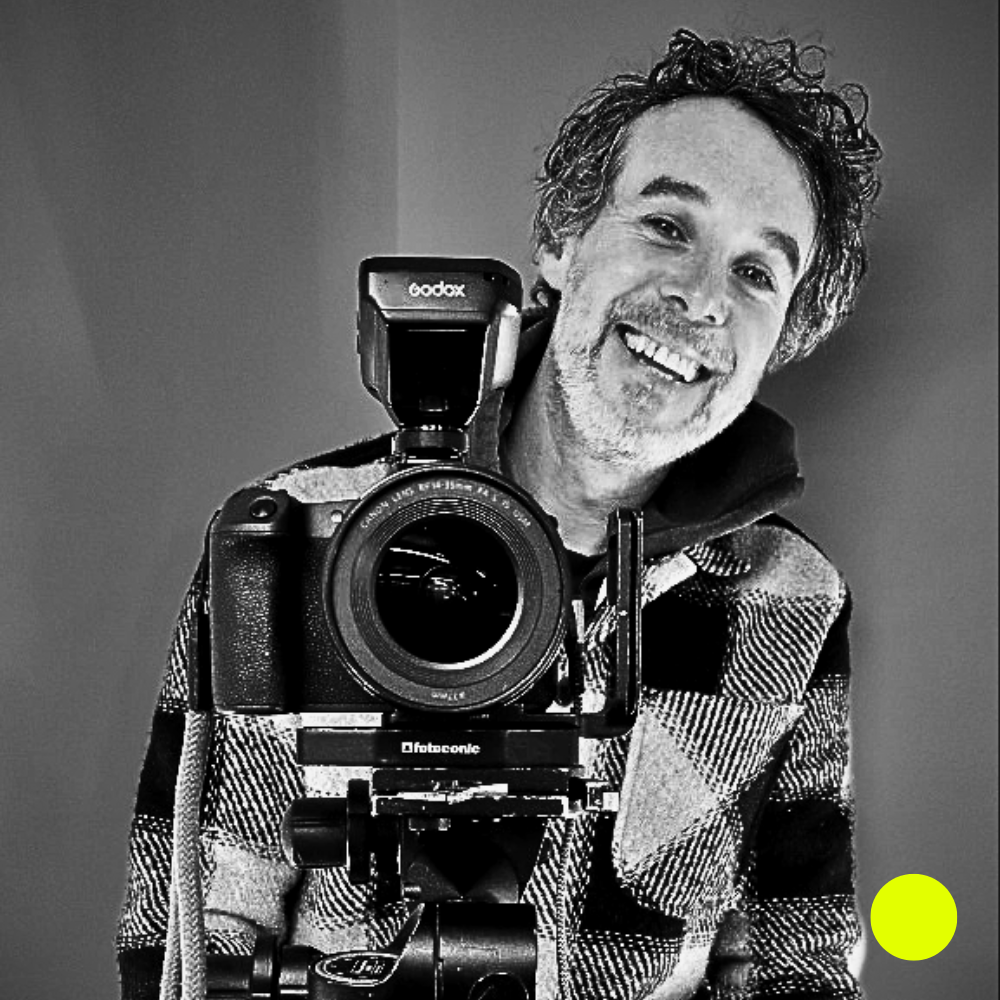
Oliver Kersh discusses the power of professional photography to enhance brand status, common mistakes business owners make around their digital presence, and practical tips for your next kitchen photoshoot.
Tell me a little bit about yourself.
Oliver: I'm a commercial interior photographer and videographer — I've been doing it for ten years. I started out in an estate agency, shooting showrooms and show homes, and broadened from there.
Now I work in the commercial interior space with interior designers, new build developments, and high-end office spaces. To date, I have done over 200 commercial property shoots.
How important is photography in communicating the value of a kitchen — and can it actually influence the type of customer you attract?
Oliver: Good photography does reflect the price of a project and it has the power to attract the right type of clientele.
When you see something online without the right packaging, without the finesse, you're not emotionally pulled to it. You are emotionally pulled to the professional one.
Commercial photography bridges that gap to attract higher-value customers by showing off kitchen and bath projects in the best light.
My job is to provoke emotion from the images — to get people to buy into the kitchen. I see it as a wasted opportunity if it's not done properly.
High quality imagery isn't just for the customer — it's part of your branding. It's a status signal: look how good our kitchen is, look how well we've styled and presented it.
It adds to the brand narrative before anyone sets foot in the showroom.
What's the most significant shift a business sees after upgrading their photography?
Oliver: Having professionally shot visual content gives businesses the confidence to do things they'd never considered before — things like entering industry awards or applying for competitions.
Without good visual assets, it all seems out of reach — that door doesn't really open. But with professional photos, suddenly it’s a different ball game.
It also signals to customers that the company cares about its product. They've gone to a bit of length and expense, and that shows pride.
When businesses skip it, the pictures end up with funny angles and inconsistent quality. That definitely affects the kind of customers you have coming through the door.
What are some of the most common mistakes showroom owners make with their photography?
Oliver: It all comes down to three things: how clean your space is, how well lit, and how well staged. Without attention to these, your pictures will look flat.
A lot of the time, the kitchen might have been installed four weeks earlier, and it's not clean enough.
Lighting is another one: everything needs to correspond. You don't want a mix of cool and warm light sources.
And props: it's difficult to carry the right styling kit into every kitchen. I work with what I’ve got but having a stylist really helps.
Why do some kitchen shoots turn out great while others look mediocre, and what can independent business owners do to get consistently high results every time?
Oliver: It all comes down to space — different windows, different ceiling height, different natural light. The photographer can only work with what's there.
Sometimes you need to stand far back and use a different lens, but you don't have enough room. Or there's a hot spot where direct sunlight bleaches one area while the other half is dark.
I shot one kitchen in a converted barn — beautiful space with windows all around — but the kitchen itself was tucked in the corner with low wooden beams and no natural light reaching it. I couldn't get my commercial lighting to the right height.
In cases like that, I take three to five exposures of the same image and blend them in Lightroom. You have to read the space and adapt.
Business owners often don’t warn you about these things, but just having a simple brief before the shoot can be a huge help.
What should business owners include in this photography brief?
Oliver: I just need three main things: first, some photos or a short video of the space — even just WhatsApp pictures from your phone. I need to know what I'm walking into.
Second, the floor plan or at least the rough dimensions. Understanding the shape of the room changes how I plan the shoot completely.
And third, the ceiling height. It sounds minor but it dictates what lighting equipment I can use and how I position it. I can't use my commercial rig if I can't get the height, so I need to know in advance and adapt.
Clients rarely think to mention it so I've learned to always ask.
When does investing in a professional shoot actually make sense for a business?
Oliver: The question to ask is: what's the end goal for this photo shoot? Do you just want to complete it and move on, or do you want to showcase it as a stepping stone to attract the next client?
Professionally photographed work is polished — it's a nuanced eye, edited and stabilised, seamlessly telling a story with the images rather than just capturing the moment.
It takes longer to put together but it is the “hero” content — what you will use for your website, competition entries, and major campaigns.
It’s very different from, say, content that you shoot on your smart phone.
A lot of independents have their own in-house marketing teams — does that encroach your space?
Oliver: Not at all. Phone content and professionally shot content are very different things.
If you put me and an in-house marketing person in the same space, you'll get the same subject but a completely different outcome.
The advantage of having a social media person in-house is that they're dedicated to the company and can just go. No booking, no lead time — they're in the kitchen that morning, shooting behind-the-scenes, capturing stills, doing video.
And with a decent phone and a gimbal, they can make it look really good, quickly. So it’s great for building the day-to-day hype.
Professional photography comes after that, as the finished product.
I'm actually working with a large property company right now who brought me in precisely because they realised that difference. Their phone content was fine for social media, but it couldn't carry the weight of the brand.
How should an independent go about choosing a photographer for their next commercial project?
Oliver: It's all down to the portfolio — go through it properly. Look at the range. Look at the colours, the tones, the lighting style, how spaces are framed.
Then find the specific images that feel right for your brand, because every photographer has a style and not every image in their portfolio will be what you need.
When you make contact, be precise. For example, “I like what you did in this particular shoot — the way the light sits, the way the space is framed. Can you bring that same approach to our kitchen?”
That conversation tells you everything. If they say “yes” confidently and can explain how they'd do it, you've found your person.
After that, having a quick chat over the phone helps to make sure you'll get on — after all, you'll be spending a full day or half day together for the shoot, so it’s important.
But really, the content of the photographer’s portfolio is what matters the most.
What's the biggest mistake business owners make after the shoot?
Oliver: Using unprocessed images.
I send over unedited images to show the client what we captured, and sometimes they're so excited they just post them straight away. I tell them not to, because they're not finished — but they get annoyed.
The problem is, my name gets attached to work that isn't how I want it to look. Because of this, I've started using watermarked proofs until the edits are done.
What’s a good number of images to have at hand for each project?
Oliver: 15 to 20 finished images is a good range. I’d say you don’t need more than 30 photos for a single project.
Sometimes businesses only want 10 photos of the overall kitchen. But I think detailed shots are important to showcase your branding, construction and design elements.
I always shoot considerably more than the final number so people can choose what works best for them.
What’s the single most important thing that negatively affects the quality of a photoshoot?
Oliver: Clutter. It can make a high-end kitchen look mediocre in photos.
A lot of times, on-site you might think a few pans or a stack of books looks homely — but in the frame, they block your sightlines. Too many obstructions and your eye bats left and right — it looks messy and unattractive.
It's like looking at houses on Rightmove: a messy room stops you cold, but a well-presented one draws you in, even if you can't explain why.
That's because it's been designed for your eye to move a certain way. You want to see the space, and your eye wants to be guided through it.
What’s the one key difference between putting together an ordinary photoshoot and a showstopper?
Oliver: It’s got to be having a stylist.
I've learned a lot over these past ten years and I’ve discovered the importance of using a professional stylist — we have very different but incredibly complementary roles.
When I work with a stylist, they handle the props while I find the angle. When the two of us work together, we can communicate properly about how to make the space look its best. The end result is much stronger.