
Paul Dwyer
MD, Thomas Crapper & Co Ltd.
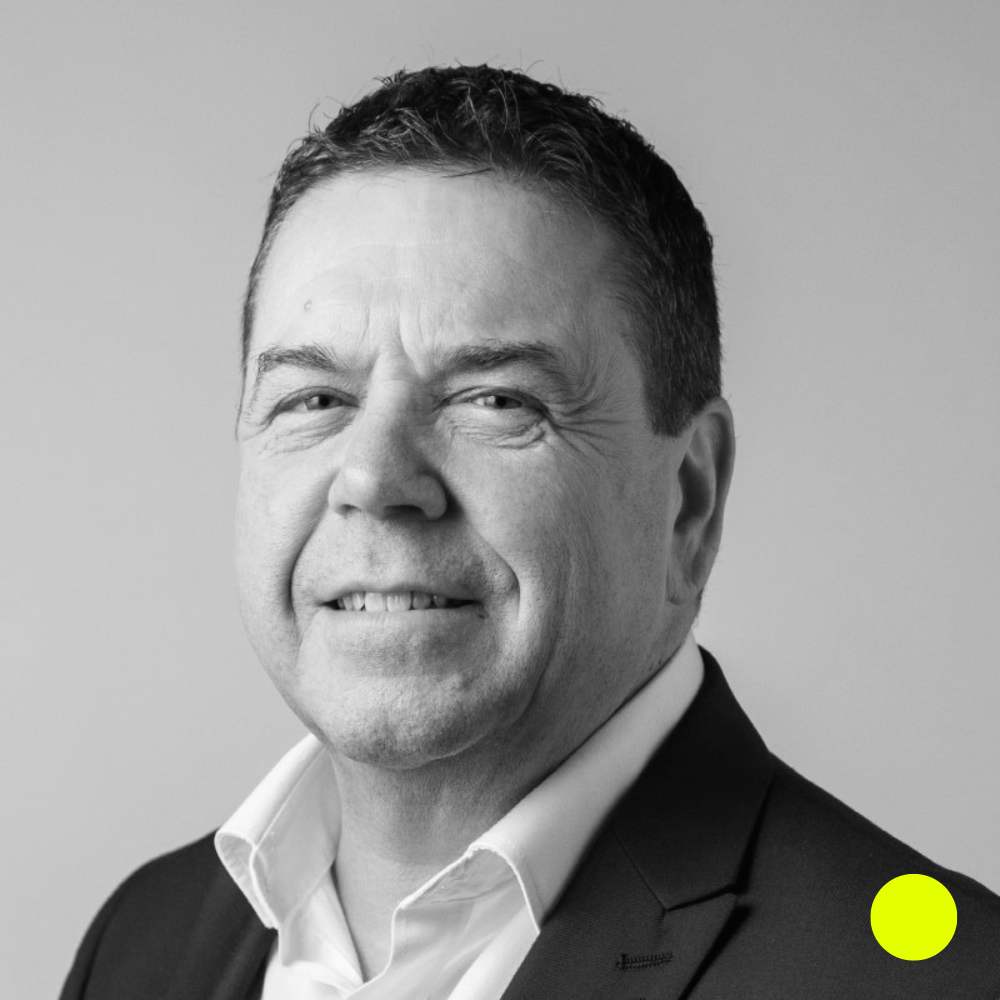
Paul Dwyer talks about how Thomas Crapper & Co. has evolved over the years, the weight of legacy behind its name, and the next chapter for one of the most storied brands Britain’s KBB industry.
What led you to take on the role of Managing Director at Thomas Crapper?
Paul: Well it’s all because of my friend David Mosley. He owns a company called Trojan Plastics — they’re the largest acrylic bathtub manufacturer in the UK, and one of the largest in Europe.
I’ve known David for over 25 years.
Anyway, back in 2015 we were having a catch-up and he pushed the prospectus for Thomas Crapper across the table, asked me what I thought.
I said, "Fantastic opportunity, great brand, really exciting."
And then he said, “Paul, if we buy the business, will you run it for us?"
Of course, I said yes, no hesitation whatsoever.
The rest, as they say, is history!
How many people are in your team?
Paul: We're a relatively small business, only ten people.
Wow! From the outside, it looks like a massive business.
Paul: Well, thanks to our history and brand presence, we kind of punch massively above our weight.
Thomas Crapper, in his day, was a commercial inventor in our industry; there's no other way to put it. He was a massive presence. He even invented the world's first bathroom showroom.
So, we inherited a lot of collateral, including numerous patents and four royal warrants. The company did all the plumbing — inside and outside, overground and underground — when Sandringham Palace was built.
We’re so proud the royal family are still customers. We can't really advertise it, but I have the very sad honour of having done toilet audits in Buckingham Palace and St. James's Palace!
Were you intimidated when you first took on this role?
Paul: Maybe I should’ve been. But the thing is, if we go back a little, the business had effectively stopped trading in the 1960s.
It had been bought by a London merchant group called Bouldings, and they stopped trading, so the business lay dormant for years.
The brand was then purchased in 1999 by our previous owner, Simon Kirby. Simon's an architectural salvage expert; he loves nothing better than going into old houses, taking out the original cast iron bath, the original sanitaryware, and even the windows, then refurbishing and selling them on the salvage market.
Simon set about recreating the brand with an underlying — dare I say — obsession with authenticity. His belief was that if a customer walked into his factory or workshop, they should be able to purchase a tap that is an identical match to the one their great grandmother had in 1905.
That gave us a wonderful legacy to build upon, but it also meant the business stayed relatively small. It was a fantastic foundation of traditional, literally authentic products, but it was tiny.
There were just 40 products in the range, including all the colour variants. There were just 12 retail partners and no channel management. A plumber could buy it; a contractor could buy it.
So, we took on channel management as a challenge.
In hindsight, yes, the task was daunting. But we just kind of took it on and ran with it.
How did you change the way the company does business since taking on the role?
Paul: Well, within the first four months, we launched a whole range of new products. We were able to do this quite quickly by using UK manufacturers.
There were various designs and styles we knew we could redesign or get involved in designing. We have continued with this way of trading, bringing new products to market every year.
What about changes in business strategy?
Paul: From the outset, even before the business was purchased, our plan was to support independent retailers in the UK.
So, we set up immediate channel management initiatives.
For example, our pricing was designed to support independent retailers. If we received leads and inquiries into the office, we fed those back into our independent retailers.
In the early days, we only had 12 retailers, so it was very, very small. But over time, we've continued with the strategy even though we have grown to 120 UK-based independent retailers, we have stuck to our strategy: you can only become a retailer for us if you actually display the product.
So showrooms only then?
Paul: Showrooms only, exactly that.
How do you balance keeping the heritage alive while modernising the brand for the market?
Paul: I think the key for us is that our legacy and history create a foundation for us, but it doesn't hold us back. It's not an anchor in the sand.
We always build on that legacy and history, and we are dedicated to the detail in the product.
Even though it’s getting difficult to find factories in the UK, we always start locally first. As a stretch, we'll then move to source from mainland Europe. Those are the key pillars that are important to us as a business.
We want products that have a presence, that spark conversations — even though, ultimately, we're selling toilets. This distinction gives us the confidence to supply our products the way we do.
Our prices are relatively high, but we are confident in our pricing. For example, our toilet seats are handmade in a furniture factory and our ceramics are handmade in the UK.
How important is it to have an online presence with your unique brand identity?
Paul: To be honest with you, our website has become far less important as we have taken on more and more independent showrooms.
We genuinely believe our retailers provide the best service, and we always encourage consumers to go to their nearest retailer. Independents really do provide superb service along with a host of other products.
We are not an e-commerce business, and we champion our independent retailers. So, even if a consumer does directly order anything from our website, we provide the retailer within that geo-location a commission back on that sale.
I genuinely think we as an industry should have a strong, independent sector, because they will do the best job for consumers; they will give the consumer the best service.
So, our website has become a much less important sales channel for us now, as we get more retailers.
Who is your ideal retailer?
Paul: Our ideal retailer is an independent showroom operating in the mid-to-high end of the market, ideally offering an installation service with displays that match or are in the same pricing area as ourselves.
We offer our existing retailers a degree of exclusivity. So, if a retailer is close to one of our existing sellers, they wouldn't be able to come on board. That's normally around 10 miles outside of London.
Also ideally, we prefer our new partners not to have checkouts on their website.
Most importantly, as a business, we like to deal with nice people and ethical independents.
You have a growing list of retailers across the Atlantic as well. What’s one thing that you think our industry could learn from the Americans?
Paul: This is a difficult one because I’m not a retailer, and it sounds as though you're criticising from the outside. But one thing I’ve noticed on my travels is that the American independent retailers are very confident about their strength and future outlook.
I remember just a few years ago, there was a WHICH study that showed the most popular destination for purchasing a new bathroom — where people believed they would get the best service — was independent retailers.
So, we as an industry could be more confident about the service we offer to consumers. It’s not easy, but it's something we could work towards.
How can independents really own their niche and stand for something distinct in the consumer's mind beyond price?
Paul: I think it comes down to storytelling and building an emotional connection with the consumer. For example, why do they have a certain brand on display in their showroom?
It's the storytelling — whether it's history, legacy, contemporary, beautiful designs, or anything else. All they need is that emotional connection to the consumer to build upon.
So coming down to the practicalities of it, what do you think small independents could be doing to make this happen?
Paul: I think it's a combination of a number of things. As retailers providing a service, they have a very, very hard job.
Ultimately, the best customers are the ones that come through a recommendation, so anything they can do to encourage more recommendations helps.
One thing we’ve found that works quite well at Thomas Crapper is collaborative social media posts.
For example, supplying installation images back to us as a manufacturer will be a massive part of it. We’ll spread those images, promoting them, for example: “You can buy it from here.” But retailers need to supply us with content for us to help them.
What should we look forward to from Thomas Crapper & Co. in the next few months?
Paul: Certainly more new products. We had a product launch in September, but certain products didn't make it into that launch from a time perspective. So, we'll do another launch early next year.
We've got some exciting movement around our new brassware ranges.
We’re also keen on continuing growth; we’re always on the lookout for more retail partners. We've still got some gaps around the country where we don't yet have a presence with a retail partner.
We pivoted to the US after Brexit. 25% of our turnover pre-Brexit was in Europe, and that's down to virtually zero now.
So, the US will continue to be important for us from a business perspective, and we'll be investing there more. The Americans love our products — the legacy, the history, the styling and everything we're doing.
Do you have the same policies in the US as with British displaying retailers?
Paul: Absolutely. I'm a simple soul. I try to keep my strategy and my rules the same across the market.
You’ve steered the business through a major transition — the acquisition in 2016 — and then a fast-changing market. Looking back, if you had to do it all over again, what would you do differently?
Paul: I would probably have taken sales agents on earlier and I would’ve delegated more, certainly on the sales side.
I tried to cover the whole country myself for a long time. That was a lot of miles, a lot of hard work, and actually not that efficient.
I would have brought more marketing support in-house. We tend to rely heavily on outside agencies, but now we'll be advertising for that role after Christmas.
What’s something about the way you do business that independents don’t know yet?
Paul: We’re trying to do business the old fashioned way, with integrity. When we say we offer exclusivity, we mean it. We work with honesty.
In the past, there must’ve been people we've dealt with who've not had the experience they wanted, and for that, I’d apologise.
We want happy customers, whether it’s the consumers or retailers. We don't get it right all the time, and I'd be lying if I said we haven't upset people over time — mainly retailers, not necessarily consumers. But we always apologise and do our best to put things right.
What are some key takeaways for independent businesses who want to grow and take on a higher-end supplier on board such as yourself?
Paul: I think they need to be brave enough to take it on, brave enough to invest the necessary time in staff training. We need to explain and tell a story of why, for example, a toilet seat is £1,000. (Because it’s a handmade piece of furniture in walnut.)
We never try to force our products on people because we offer exclusivity. If we did and it's not right for them, then we'd be tying up an area up with the wrong partner — that's poor for both parties.
But at least if we get a hearing, we'll be able to have a friendly conversation and decide whether it's right for both of us. If it's not right for them, we shake hands and walk away.
We're still quite small and we're still trying to find new retailers, so give us a chance.