Rav Reehal
Owner, VR Bathrooms
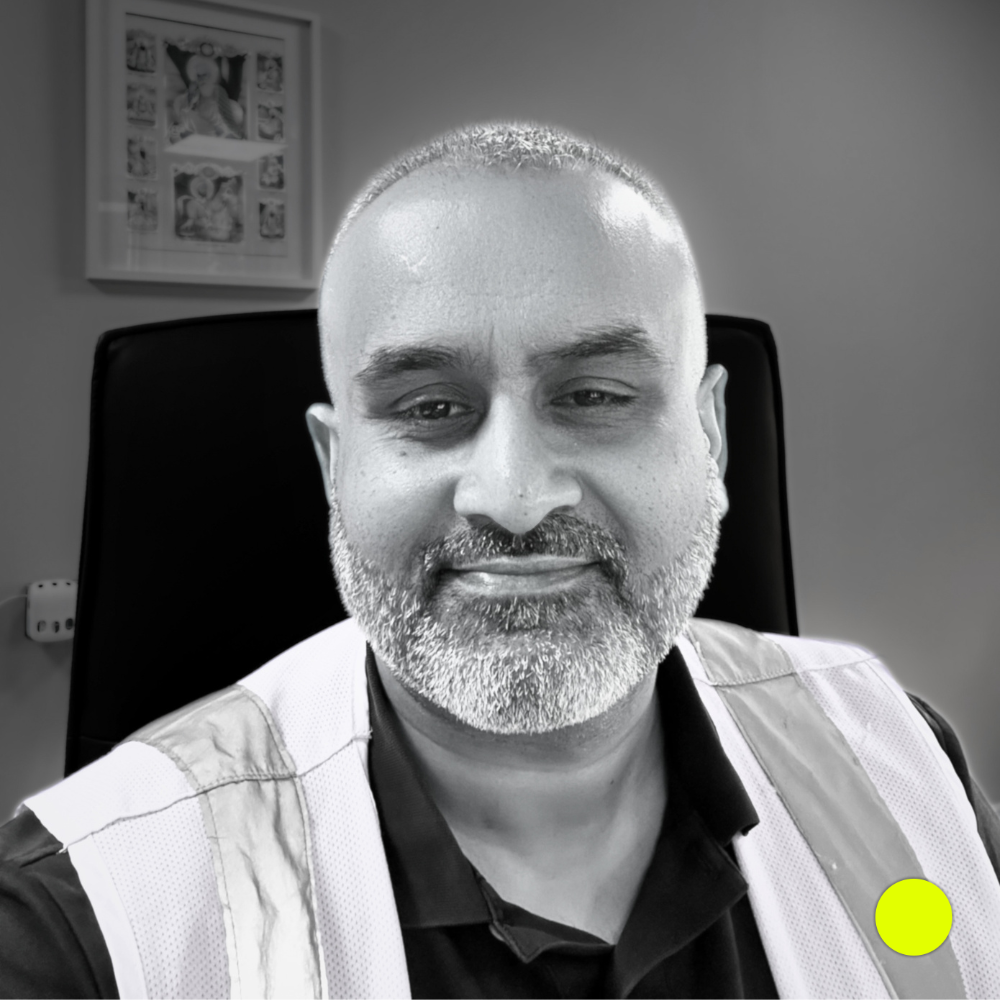
Rav Reehal challenges the bathroom industry's disposable culture with durable, waterproof products. He talks about his approach to team leadership, recruitment and the mindset shift that drove his company's exponential growth in a challenging market.
Tell me a little bit about VR Bathrooms – how did it come about and how has it changed?
Rav: I started the business in 2008, just by myself, as a sole trader. I’d spend one day selling the products, and the next out delivering them myself.
We started off by just selling one or two lines of products, mainly bathroom furniture and toilets. Since then, we’ve added several product categories including shower doors, flooring, and cladding. Today, our portfolio spans everything from toilets and taps to bathtubs.
The business has grown significantly in the last four years and we’re now operating across two sites: one in South Wales and one in Berkshire. We currently employ 28 people and we’re still growing. It’s an exciting time.
What makes your business stand out in such a crowded space?
Rav: Our business is primarily distribution, and we like to consider ourselves as innovators.
Innovators – how so?
Rav: We look at trends to identify gaps in the market where there is a growing demand. Then we come up with our own unique product designs and colours, manufacture them and distribute them to our retail partners. For example we produce a unique basin that is licensed exclusively to us, using our own custom-made basin mould. It’s unlike any other on the market.
So we’re more than just distributors – we control the manufacturing process within our supply chain too. I visit our manufacturing partners in the Far East regularly for quality control; this ensures high standards from the point of origin right down to the distribution.
What would you say is your star product?
Rav: Currently, our biggest-selling product is PVC furniture, which we started making in 2023 using our own carcass designs. We've recently added new colours and designs and our product portfolio has expanded rapidly, especially over the last six months.
What does a strong team look like to you?
Rav: I believe a strong team is built on good communication and clarity around individual responsibilities. It’s also about fostering a culture of personal and team development – investing in our people, making sure they’re happy, and providing training and development so they can grow. If people are not growing within the business, they’ll look elsewhere.
Your team has grown to 28 people and it’s still growing. How has your leadership approach evolved over the years?
Rav: My approach has always been based on an open-door policy, and that hasn’t changed to this day. Anyone in my team can come and speak directly to me, from drivers to warehouse staff to office staff to sales reps – it’s always been like that.
People spend a large part of their lives at work – and when they’re there, they want to feel happy. Productivity matters, but you can’t be truly productive if you’re not content in your role.
While we do have a typical business hierarchy, I believe in staying approachable and fostering a culture that invests in people.
What does investing in your team look like in practice?
Rav: We provide regular training and development, and encourage staff to learn about or move into other areas of the business. For example Tommy, our marketing executive, initially joined as a business development apprentice. At the end of the apprenticeship, we hired him as a full-time employee and then transitioned him into a marketing role. So we want our people to grow their skillsets and careers.
VR Bathrooms is nearly 18 years old, yet it is only in the last four years that you’ve seen massive growth. What changed?
Rav: Initially when I started the business, I did it with my own money and I rented the premises. But as rents started to go up, I decided to buy my own premises by taking a loan. That was only in 2021, and I didn’t buy my second site until last year.
The growth has been phenomenal: we went from six to seven staff in 2021 to now having a team of 28, and we’re still hiring. Recently we displayed some of our latest innovations at the Installer Show and we’ve had a fantastic response.
The business always had potential, but I think it was that change in mindset – being more decisive – that triggered the expansion. The support from our loyal customers and everyone around me has played a big part in helping the business grow. All the staff, from the Warehouse to Operations and Sales, have contributed to making the company what it is today.
The KBB industry is struggling to attract young talent. How is your business addressing this, or are you facing similar challenges?
Rav: We’ve been heavily involved in recruiting apprentices and getting them through apprenticeship schemes via learning providers. We’ve had so many apprentices in the past.
Our current marketing officer came through an apprenticeship and now works full-time for us, doing a fantastic job leading our marketing efforts.
However, the new government legislation around National Insurance is making it harder to hire young people unless they have experience. As a business too, we've got to a stage where we're so busy that it's difficult to invest the necessary time, training and support into apprenticeships.
So for us, it’s a trade-off – we like to promote from within, moving young people into senior positions, but it’s proving to be challenging.
Are you concerned about what this means for the future of the industry?
Rav: Yes, it is a concern, and I think young people who are just leaving school to apply for apprenticeships are being overlooked and not getting enough opportunities.
I personally know a 17-year-old who’s struggling to find a job; no one wants to hire him, which is very sad. .
It’s very hard for young people right now because employers can pick and choose instead of investing in training a young person with no experience. Unless businesses have got the resources, time and energy to invest in apprentice training, they would rather pay slightly more than the minimum wage for someone with experience.
So what do you think is the solution – how do we move past this point as an industry?
Rav: I think the government really needs to step in to help and incentivise businesses to hire apprentices. It’s got to come from the top.
You’re juggling so many roles; how do you stay on top of everything?
Rav: For me, it’s important to go into the office everyday. I run the business day-to-day and I’m very involved and in constant communication with our managers. Also, my open-door policy means that my people can come directly to me whenever they want.
I’ll give you an example – I visit our Wales site every month, sometimes twice a month. Last time I was there, my team managers said that they needed additional support. So instead of coming home, I scheduled a three-day visit to stay on site, see how things are going, help improve operations and support my staff. It’s about working smarter, not harder.
The BBC recently reported the biggest monthly drop in UK house prices in over two years. How do macro trends like that affect your business?
Rav: We’ve been very fortunate, despite serving the premium end of the market which is usually first to take the hit when the market dips. But we’ve actually remained quite insulated. Even during COVID, people were still buying bathrooms.
At the end of the day, you can’t live without a working toilet or shower – those things don’t wait for the economy to bounce back.
That’s happy news for you as a business, isn’t it?
Rav: Exactly. In fact, our year-on-year sales growth has been around 30% for the past four years, even through some pretty challenging times. Part of that comes down to our product range – we’ve got strong USPs in the market, especially with our PVC bathroom furniture.
But it’s also about brand: we’ve built a solid reputation for quality, and we’re continuing to grow that. Our broader product portfolio reinforces that positioning too. When it comes to PVC furniture, we’re leading from the front.
Most B2B companies in this space are quite traditional in their business approach – both strategically and tactically. How are you doing things differently?
Rav: Without blowing my own trumpet, I’d say we’re an up-and-coming distributor. The businesses who survive are resilient in their approach and adapt to challenging conditions. It's like when the iPhone first came out – suddenly phones turned into handheld computers.
So we track and analyse market trends and respond quickly to fulfill market needs. While bathroom furniture is widely available, we adapt to how the market is changing and constantly look at new ways of doing things.
What are your thoughts on the current state of the bathroom industry?
Rav: I think what’s happened in the industry – and I hate to say it – is that it’s started to resemble the fast fashion industry.
Back in the day, the market was limited. There were only a few major manufacturers – names like Twyfords or Armitage Shanks – and that was about it. They were the big players, and the products they made back then would probably still last today.
But these days, things aren’t built to last – there is a widespread disposable culture. People buy something cheap, it does the job for three to five years, and then it needs replacing.
So what sets your brand apart in the current state of the industry?
Rav: We’re bringing back the culture of longevity. We take a very methodical approach to our business positioning – there’s always a reason behind what we’re doing.
We saw that there was still a real need for durability: when customers spend money on a bathroom, they expect it to last. It’s not just a functional space – it’s somewhere to relax, unwind, a kind of safe haven.
That’s why our brand is all about lasting quality – everything we sell is 100% waterproof. Flooring, cladding, bathroom furniture – it’s all designed to withstand water. A customer could redo their whole bathroom and not have to worry about water damage.
That’s the standard we set. That’s what our brand stands for. Longevity.
What are you genuinely excited about for the rest of this year and next?
Rav: I don’t want to reveal too much at this stage, but I think “expansion” would be the magic word. It’s a work in progress and I’m very excited about it.
If you could go back in time and do it all again, knowing what you know now, what’s one thing you’d do differently?
Rav: I would have grown quicker. Our expansion has been massive over the last four years, but the business is 18 years old. The first 14 years were much slower. Had I acted sooner, we’d be a lot bigger now.