
Satt Sembhy
Owner, Broadway Kitchens
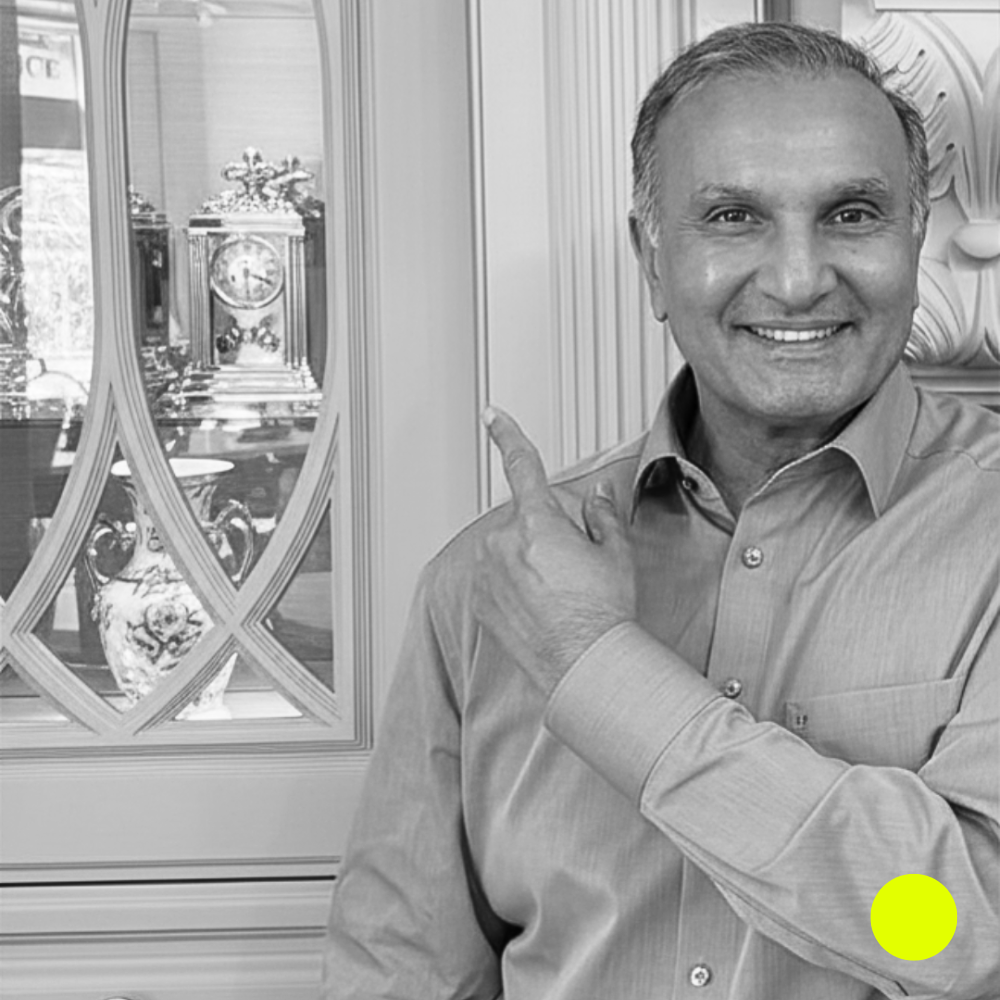
Satt Sembhy discusses building a 50-year family business catering to high-end entrepreneurs, navigating tough economic times through smart marketing and AI adoption, and the importance of adapting to change to serve customers.
Broadway Kitchens has been around since 1974. Can you tell me about its origins, when you personally decided to join the business, and how you knew this was the path for you?
Satt: The business was started by my father. Back then, it was called Sembhy and Son. Two years later we changed it to Broadway Kitchens.
Although in a family business, you're always helping. I started helping my father part-time from the age of 15 while also doing courses in design.
I officially started full time in 1982.
Who is your ideal customer?
Satt: We have created a bit of a niche for ourselves; it's mostly business owners, entrepreneurs, directors, people who are self-employed, people who are self-employed and couples who are looking to making their house a home they spend more time in, often couples have their kitchens remodeled with the idea of spending more time together so they couple it with having a media wall and bar area in an open plan environment.
We work with homeowners; we don't do commercial fit-outs and we don't just do kitchens. We do kitchens, bedrooms, studies, bars, media walls, bathrooms — all types of furniture, really.
Targeting entrepreneurs is unique. How did you figure that out, and what do you do to stay relevant to these people?
Satt: When you've been in business for 52 years, you just carve out a niche it’s mostly through word-of-mouth and recommendations. Some of our customers have literally grown up with Broadway.
For example, I have one customer for whom we did a kitchen when I was working part-time. He was an engineer managing about half a dozen people at the time.
50 years later, we’ve done four kitchens for his different houses and he is now the business director. That loyalty developed over time. Now we're doing kitchens for the grandchildren of our original customers.
Our customers refer other like-minded people to us so it’s a multiplier effect. More than 65% of our clients are business directors or self-employed. Sometimes that number reaches 80 or 85%.
That's how we carved out this wonderful niche we are inevitably catering to the ultra high end luxury market.
Costs have gone up across the board over the last few years. How are you coping?
Satt: We've had a few tough years. When businesses take a downturn, so does everybody else it’s a multiplier effect in reverse.
Profits aren't as good as they were, but we've been fortunate. We own our manufacturing factories, vehicles, and machinery and we pay for everything outright. When the recession hit, since we had no borrowings, we were debt free. We've got fabulous people working for us, and we owe it to them to keep the company going.
How do independents survive and stay competitive given the current economic volatility?
Satt: You must negotiate better with your suppliers.
Yes, we tighten our belts, we save where we can. But then which goes against the grain we increase our social media presence and our Google ad spend.
In a recession, we up our advertising. We put pressure on suppliers for greater discounts and we increase our visibility.
Finding skilled young people is becoming harder in the trades. What is Broadway Kitchens doing about it?
Satt: We're still taking people on. In fact, we're really busy right now. We’re currently looking to recruit two skilled people and train them up.
But we’ve also saved on costs by outsourcing some of the products we used to manufacture in-house.
We used to do all our carvings in-house. Now we make the original moulds and carvings, and get them copied exactly to our specification by outsourcing them to India and China.
We've also introduced a range of mouldings made from resin rather than real wood, which has resulted in quite substantial savings while maintaining the same aesthetic.
What is one change you've made in the last few years that has had the biggest positive impact on the business?
Satt: In January, I gave a directive to all of my staff to get on with AI.
I get up every morning at 6:30 and train myself for one hour. YouTube is an invaluable source. We also use HeyGen and the paid versions of ChatGPT, Claude, Grok and Gemini.
All of my office staff are now familiar with AI, and we're using it to produce better quality renders.
We do presentations online using TeamViewer so customers anywhere — whether they’re in Scotland or London — can see my screen. It's like they're sitting right next to me.
You have to work through trial and error to find what works — I'm still learning. But it's amazing what you can do with the right prompts.
There's no need for expensive KBB-specific software anymore. AI is doing a far better job at a fraction of the cost.
For exact measurements, we still use AutoKitchen.
Showrooms are expensive to keep fresh. How do you manage upgrades and maintenance?
Satt: Most kitchen displays tend to last between five and seven years before trends change, but classical and period kitchens don't go out of fashion.
Our displays are timeless pieces of hand-painted furniture and kitchens, so we don’t need to change them very often. We can create the illusion of a new display simply by changing the appliances, worktops, and accessories.
As an example: the drawers in our space tower display now light up automatically when you open them. All we did was take the units to the workshop, have them refitted with lights and reinstall them. This brought them up to date.
Our next upgrade is going to be a motorised version of our pantry display.
What is the biggest mistake you see independent KBB businesses making today?
Satt: Fear of change.
There's a well-known phrase: the only constant is change. People hear it, but they don't exercise it. It's imperative to exercise that cliché.
People get stuck in their ways and companies die because they haven't adapted to a changing world.
I've made a habit of teaching myself something new every day, like AI.
If somebody wanted to set up an independent kitchen showroom, what would you tell them to focus on?
Satt: First, I'd tell them to consider the cost of setting up a showroom and think hard about investing that money elsewhere first. I would recommend working out the total investment required and speaking to a serious accountancy practice PricewaterhouseCoopers, Ernst & Young, Grant Thornton.
Pay for a meeting and ask: "If I invested this same money elsewhere, what are the maximum returns I could get?"
Sometimes that money can work harder in the stock market, commercial property, or converting a building into multiple rental units.
Setting up a showroom is expensive. 95% of all businesses fail within the first five years. Make sure it's the right decision before you commit.
How important is having an online social presence for business?
Satt: Social media is a huge part of our business. My daughter is involved on the marketing side because if you disappear, even your existing customers forget you.
While attending a family event over a few days I told the team to pause all social media for a while but within a week, two business colleagues reached out to ask if everything was okay with the business. They'd noticed the silence.
You always have to have a presence. Facebook, Instagram, TikTok, writing relevant articles for Google it's all free advertising, really.
What does the next chapter of Broadway Kitchens look like?
Satt: The next chapter is to stay relevant, to carry on working.
The most important thing in life is to add value to other people your wife, your parents, your children, your grandchildren. And very importantly, your customers.
It's not all about profit. It's about people.
We never think: how much profit can I make out of this job? We think: how can we add value to the people we serve? How can we enhance the lives of the people that come to us?
Business is all about service.