Steve Root
Roots Kitchens Bedrooms Bathrooms
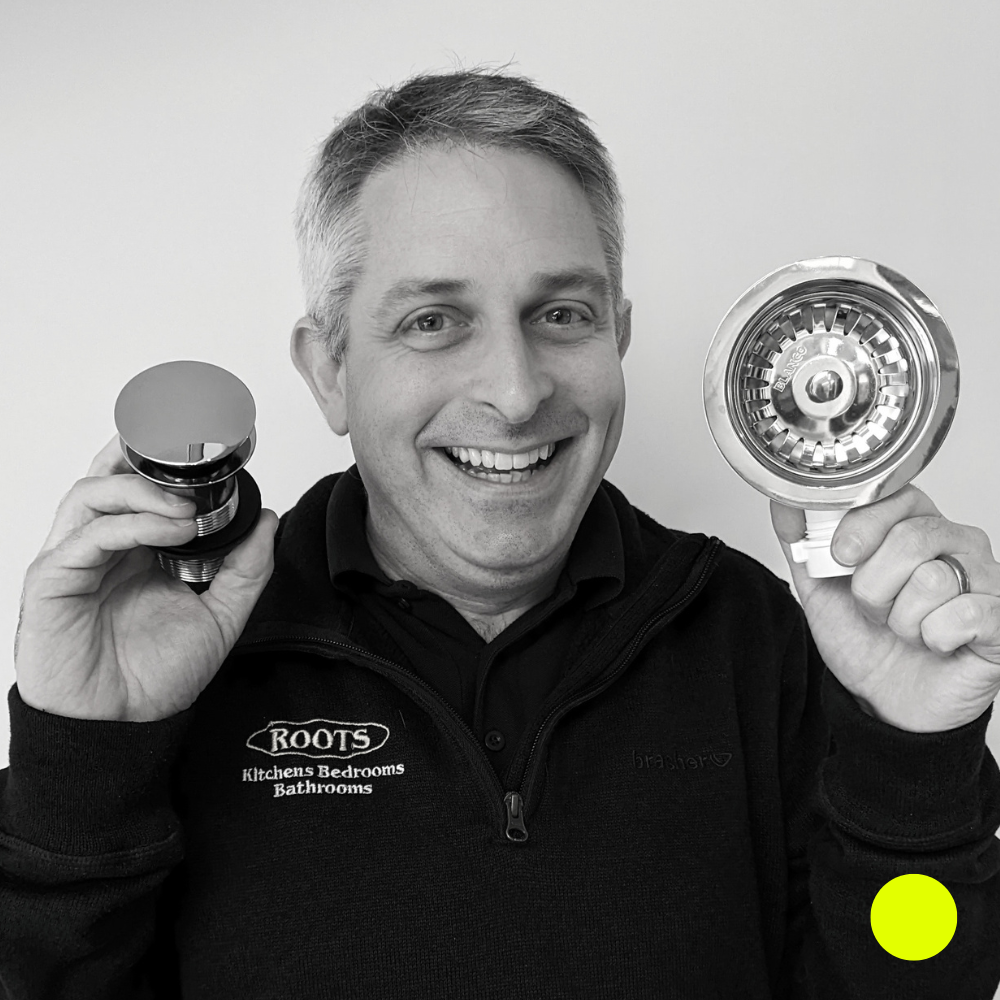
Steve Root discusses his deliberate choice to stay local and prioritise trust, high-quality service, and customer loyalty over expanding his business geographically.
Tell me a little more about Roots Kitchens Bedrooms Bathrooms: how did you start, and what do you do?
Steve: We started the business back in 1998. I’d finished a Business Studies apprenticeship and was waiting to join the Air Force. In the meantime, I sold bathrooms at weekends for a friend.
My parents wanted to open a shop, and so we launched Roots. By the time the RAF had vacancies, the business had taken off, so I kept going.
Today we’re a small, independent retailer of kitchens, bedrooms, and bathrooms. We design, supply, and install, managing the whole project. Our niche is taking on more complex jobs than average. Despite that, we’re tiny – about a million-pound turnover, which is nothing in our industry.
Your business is going on 27 years now, yet you’ve remained in your corner of Kent. Why is that?
Steve: Yes – in fact, we’ve actively reduced our working area to East Kent, and for good reason. We did it to improve service.
When we started, I’d go anywhere in Kent for work. The original plan was to open one shop, then another after five years, like a regular business grows. But we never did. People really trusted us, and we wanted to live up to that.
We’re not really selling products – we’re selling trust. It’s a very personal service. Customers believe in us to deliver, so we focused on a smaller, tighter area to give our best.
Our projects are quite specialised and usually last about four weeks. Our customers aren’t very brand-led; they trust our recommendations. And if something goes wrong, even 15 years later, we’ll come back and sort it, often for free.
Choosing to remain small is a unique way of looking at the future of your business.
Steve: It’s not about making the business smaller, it’s about focusing on service. I just want to do a good job and keep everyone happy.
The kind of loyalty our customers show is very humbling. Just this morning, I surveyed a bathroom job for someone whose in-laws had their kitchen done by us 22 years ago, and now their kids have come to us. We don’t take that kind of trust for granted. We do the best work we can, and we never overprice our products.
Shrinking the area helps; it wouldn’t be possible if we spread ourselves too thin. This way, if a customer calls with a problem, we’re always close enough to help – even on jobs from 15 years ago.
Often we’ll fix things for free. That keeps our reputation strong, and people come back for second and third projects.
Why did you choose to run a shop from this location, rather than a more commercial spot?
Steve: Oh, Vine Farm is very special! I started the business with my mum – she did all the paperwork while I learned how to design. Two years in, we outgrew our rented shop and bought Vine Farm. My parents converted a house on the site, and later, we turned the barn into our showroom.
It’s a beautiful setting, and owning the site is a real privilege. We love looking after it, and my parents live right next door. It’s a different kind of pressure compared to leasing: you care more because it’s yours. You want to keep it beautiful. We’ve been very lucky.
Your business is built on trust and recommendations, but it’s hard to survive without promoting yourself. How are you holding up?
Steve: We’re not against marketing – in fact, we’re planning to start advertising again. If we really pushed, we could be doing three or four times the business volume, but that’s not our goal.
We don’t want to spread ourselves too thin. We want to do a good job.
That sounds like it goes against the usual business-owner mindset.
Steve: Probably! But success for me isn’t just money – it’s happiness, low stress, and knowing we’re doing good work. That can be tricky when you run a business because people expect financial growth. But my drive has always been: whatever I’m doing, I want to do it properly, I want to do it well.
How does that show up in the way you work?
Steve: I’ve got a tiny team – just four employees. Everyone else, like fitters, are subcontractors. But we’ve built a team that really cares about doing good work.
We’d rather take an extra day to finish a job properly than rush and do a poor job, even if it means pushing back new project dates. That pays off in the long run.
People want to work with us. Our carpenter’s been with us for 22 years. We’re nice people. We pay our fitters within seven days – which, the fitters tell me, isn’t normal in this industry.
So we’re small, but we work hard and try to do right by everyone. That’s the crux of how we work.
You’re heavily involved in your community — Rotary, the RAF Air Cadets, Kent Youth Trust. How do you manage that alongside the business?
Steve: It’s just who I am. Rotary clubs are groups of local people that get together to do good things. Sometimes that can be as small as installing a park bench, and this year, our club led the fundraising and grant applications for an $80,000 food security project in Africa.
I’ve taught RAF Air Cadets for 20 years – aviation, leadership, and more. Seeing young people grow is hugely fulfilling. One cadet I taught is now flying Merlin helicopters for the Royal Navy. I love thinking I was a small part of his journey.
Being self-employed gives me the freedom to help. If I want to use one of our vans to help a charity move goods, I can. That’s a huge privilege. I love this business and the life it gives me.
What are some of the biggest challenges on your radar?
Steve: One big challenge is the lack of skilled fitters. Another is waste recycling.
Currently, the government is not accurately tracking the full lifecycle of appliances that have scrap value – these products are still being recycled, but not in a way that the system can trace. A lot of this stuff just gets sold on eBay or scrapped, and that data isn’t captured.
So even though manufacturers might be paying into recycling funds, it’s the retailers who are bearing the real costs. For example I once tried to recycle a printer; it cost £150 to ship it as hazardous waste! I think the Waste Electrical and Electronic Equipment (WEEE) regulations are flawed. The whole system could be better, more transparent – but right now, it’s the KBB retailers carrying the burden.
Switching gears, tell me about your What3Words challenge.
Steve: Oh, the “///kitchens.bedrooms.bathrooms” challenge! It started with my love of navigation. I noticed our loading bay’s What3Words address was “///barstool.random.kitchen.”
Out of curiosity, I looked up “///kitchens.bedrooms.bathrooms” and it turned out to be on a mountain in Corsica. That’s incredibly rare, for it to be on land and accessible.
I first tried going in 2022, but the day I landed, there was a deadly storm. I got stranded, had a flat tyre, and nearly got evacuated. So for safety, I turned back a few kilometres short.
I went back the following year and completed it. It was one of the hardest navigations I’ve done, but incredible! I documented it on YouTube.
Amazing! So what’s next?
Steve: There’s always a new challenge on the horizon. I’m training to run a full marathon next spring, and I’m looking forward to making more YouTube videos – not for business, just to share knowledge.
On the business side, I’m excited about launching our revamped sliding wardrobe range. The KBB industry is full of exciting things. The challenge is often what not to do.
But at the end of the day, people just want rooms that work. I’m always looking forward to the moment when a customer says, “This is exactly what we wanted. It’s perfect.” That’s the best feeling in the world.
Knowing what you do now, if you had to do it all over again, what is one thing you would change?
Steve: I started at 21 – young and overconfident. My life today is a sum of all my good and bad decisions.
I find the business hard work, and I have to work hard every day. I’ve had my struggles, but I’ve been lucky. I wouldn’t change anything major. I appreciate what I have – the balance, the privilege. My life has been charmed. I just want to keep doing what I’m doing.